


From comprehensive diagnostics to complete therapy — all in one center
Not one method — a tailored combination
There is no universal method for the developing brain. Real impact comes only from a coordinated set of modules, customized to a specific child's profile. We integrate behavioral work, rehabilitation, neurotechnology, and biomedicine into a single plan.
Therapy is not a service — it's a program
In the conventional model, a parent comes "for speech therapy" or "for neuropsychology" — as a separate visit, separate contract, separate logic. At KidiMind, therapy is a coordinated program of 6–10 modules that work toward shared goals and are aligned across specialists.
One child may simultaneously receive behavioral work, speech therapy, sensory integration, neurofeedback, and nutritional support — and all of it moves in the same direction. No duplication, no contradictions, no coordination gaps.


What makes up the program
A plan is not a list of services from a price list — it's a response to a specific child's profile.

Child's profile
Diagnostic results: strengths, primary challenges, biological and environmental factors that amplify symptoms.
Priorities for 3–6 months
The team defines 3–5 key goals. Not "everything at once," but what will deliver impact in the near term.
Module selection
For each goal — a specific set of methods. One module can address multiple goals simultaneously.
Schedule and intensity
How many visits per week, what format, how many weeks per course. Tailored to the child's age, family resources, and profile complexity.
Six areas of our team's work
All methods at the center are organized into six thematic groups. Within each — specific modules that may be included in an individualized plan.
Neuropsychological therapy
What it is:
Work with behavior, emotions, thinking, learning, and communication. The foundational "core" component of virtually any program.
What's included:
- Play-based behavioral therapy
- Cognitive Behavioral Therapy (CBT)
- ABA elements
- Speech therapy and language stimulation
- Cognitive stimulation and rehabilitation
- Executive function training
Indicated for:
ASD, ADHD, developmental delays, speech and language disorders, learning difficulties, behavioral challenges, anxiety and depression, genetic syndromes, neurotypical children.

Sensory integration and developmental environment
What it is:
Work with sensory processing, bodily regulation, daily living skills, and activity organization.
What's included:
- Sensory integration (OT)
- Montessori room
- Training in independent living skills
Indicated for:
ASD, developmental delays, sensory processing differences, genetic syndromes, neurotypical children with regulatory challenges.

Motor therapy
What it is:
Work with muscle tone, coordination, posture, motor planning, and physical maturity. Without a stable body foundation, attention, speech, and learning cannot function optimally.
What's included:
- Physiotherapy
- Kinesiotherapy and rehabilitation
- Osteopathy
- Motor and attention development protocols
Indicated for:
Motor developmental delays, ASD, genetic syndromes, ADHD with motor immaturity, cerebral palsy, and neurological conditions.
Instrumental neurotechnologies
What it is:
Modern, evidence-based methods that work directly with brain neurophysiology — for regulation, attention, and neuroplasticity.
What's included:
- QEEG-guided neurofeedback
- tDCS (transcranial direct current stimulation)
- Photobiomodulation
- VR therapy
Indicated for:
ADHD, anxiety disorders, ASD, developmental delays, learning difficulties, epilepsy, headaches, and support for neurotypical children with regulatory challenges.
Supportive therapy
What it is:
Methods that enhance engagement, emotional expression, sensory integration, and social connection.
What's included:
- Music therapy
- Art therapy
- Group therapy
Indicated for:
ASD, anxiety and depressive disorders, behavioral disorders, genetic syndromes, and emotional competence development in neurotypical children.
Biomedicine and nutrition
What it is:
Work with biological factors that influence brain function and behavior: nutrition, deficiencies, microbiome, metabolism. Often the missing link in standard therapy.
What's included:
- Functional nutrition
- Genetics- and metabolism-based dietary planning
- Microbiome correction
- Food intolerance management
- Correction of vitamin, mineral, and amino acid deficiencies
- Personalized nutraceuticals and vitamin supplements
Indicated for:
ASD with GI complications, behavioral disorders, ADHD, genetic syndromes, metabolic conditions, and neurotypical children with feeding challenges.
Take the first step
Book an initial consultation. In one visit, we'll take a full history, outline hypotheses, and explain which pathway is right for your child.
Barcelona, C. de les Camèlies, 19–21 · Mon–Sat
What else is included in our work
In addition to therapeutic modules, the center provides coordination, medical support, and family assistance.

Medication management
When indicated and under physician supervision: for ADHD and behavioral disorders, epilepsy, anxiety conditions. Principles of rational prescribing and continuous monitoring.

School and educational support
Consultations with schools, recommendations for teachers, development of accommodations, coordination with educational psychologists and special education staff.

Telemedicine and online support
Some consultations, parent coaching, and parts of monitoring can be conducted online — for families from other cities or for regular support between in-person visits.
Диагностика микробиома
Анализ кишечной микрофлоры для выявления дисбаланса, влияющего на поведение, иммунитет и развитие нервной системы.

Дефициты аминокислот, витаминов
Лабораторная оценка уровня ключевых нутриентов для коррекции скрытых дефицитов, влияющих на развитие мозга и поведение.
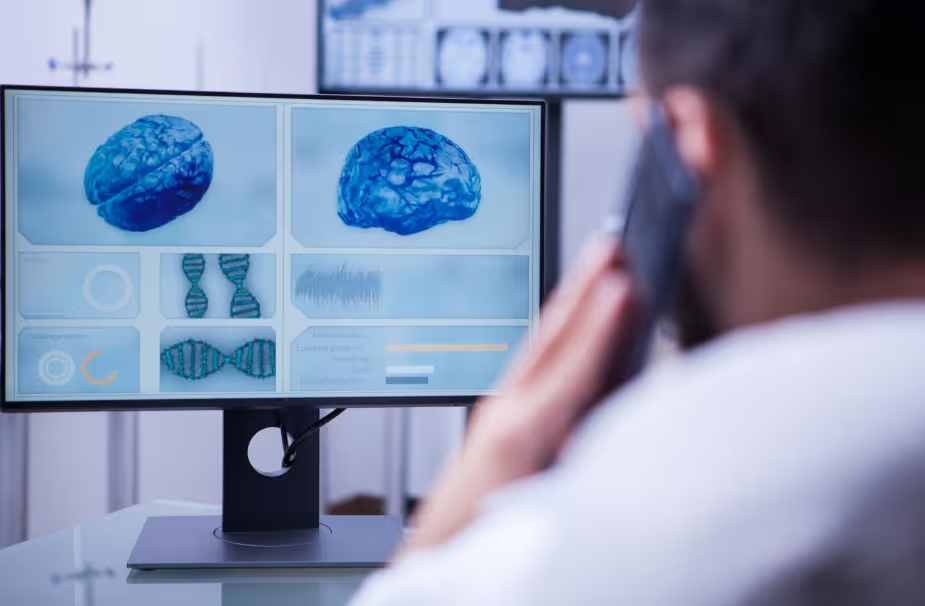
QEEG и Brain Mapping
Количественная ЭЭГ и картирование активности мозга для объективной оценки функционального состояния и подбора нейротренировок.

Генетическая диагностика
Исследование генетических особенностей, влияющих на развитие нервной системы и метаболизм, для персонализированного подхода к терапии.

Анализ тяжелых металлов
Диагностика накопления токсичных металлов и разработка безопасных протоколов детоксикации для защиты когнитивных функций.
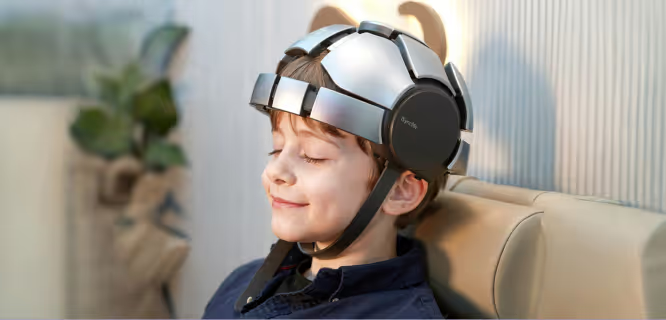
Нейрофидбек
Игровая тренировка саморегуляции мозга в реальном времени для улучшения внимания, контроля импульсов и эмоциональной стабильности.
tDCS
Нейромодуляция слабыми токами для стимуляции нужных зон мозга и улучшения когнитивных функций, речи и моторики.

VR-терапия
Тренировка когнитивных и социальных навыков в безопасной виртуальной среде с адаптивной нагрузкой под возможности ребёнка.
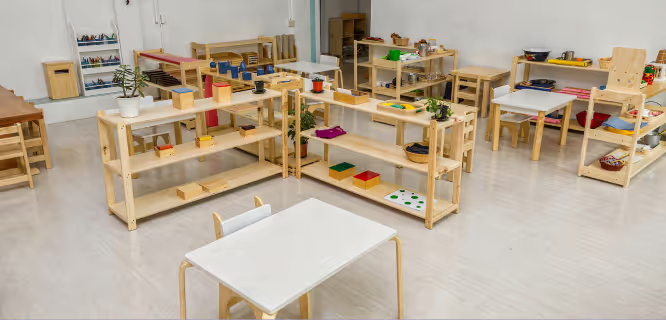
Sensory Integration Room
Специальное пространство для развития сенсорной обработки, улучшения координации, внимания и эмоциональной регуляции.

Физиотерапия и реабилитация
Индивидуальные программы для развития моторики, координации и функциональных навыков при неврологических нарушениях.
Когнитивная и речевая реабилитация
Доказательные методики для развития внимания, памяти, речи и коммуникации при задержках развития и учебных трудностях.

Групповая терапия
Занятия в малых группах для развития социальных навыков, коммуникации и эмоционального интеллекта в поддерживающей среде.
What guides our method selection
All methods we apply have scientific grounding and a place in international clinical guidelines.
ASHA
Speech, language, AAC, childhood apraxia of speech
AAP
Pediatrics, ADHD, developmental delays
NICE
Mental health, anxiety, depression, behavioral disorders
ACMG
Medical genetics, exome and genome sequencing
How plans are built for different children
Three examples of typical programs to illustrate the logic behind module selection.

Example 1 — 4-year-old child with ASD
Profile:
No phrase speech, Sensory overload, GI complications, Restricted diet
Program:
- Speech therapy and communication (3x/week)
- Sensory integration (2x/week)
- Behavioral therapy (2x/week)
- Biomedical module: microbiome, deficiencies, dietary support
- Parent coaching (2x/month)
Anna K., mother of Sasha, 4 years old
Speech and language delay, autism spectrum features

Example 2 — 8-year-old child with ADHD
Profile:
Concentration difficulties, Impulsivity, School adjustment difficulties, Anxiety
Program:
- Executive function training (1x/week)
- QEEG-guided neurofeedback (2x/week)
- CBT for anxiety (1x/week)
- School support and accommodations
- Nutritional correction (when indicated)
Maria and Dmitry, parents of Artem, 8 years old
ADHD, attention difficulties

Example 3 — Healthy 6-year-old child, school readiness
Profile:
Neurotypical development, Fluctuating attention, Low graphomotor skills
Program:
- Attention and executive function training (1x/week)
- Motor development protocols (1x/week)
- Montessori room activities (1x/week)
- Parent workshops (1x/month)
Elena V., mother of Liza, 5.5 years old
School readiness, executive function development


How we know what works
Every module in the program undergoes regular effectiveness review. If a specific method doesn't deliver the expected progress — we adjust it, without waiting for it to «maybe work someday.»
Standardized scales
Specific tests aligned with each goal: attention, speech, behavior, motor skills, emotional regulation.
Behavioral observation
Regular documentation by specialists tracking progress between visits and across different contexts.
Family feedback
Structured questionnaires for parents and teachers — what's changing at school, at home, in social interactions.
Case conferences every 2/4/8 weeks
The team reviews the program based on data. What works — we continue. What doesn't — we replace.
Frequently asked questions from parents
How many therapy modules does a child receive simultaneously?

Usually 3 to 8, depending on the profile and age. Too many — the load becomes counterproductive; too few — no meaningful effect.
Can we choose just one method?
Technically — yes, but we don't recommend it. Real impact comes from a coordinated program, not an isolated service.
How long is one session?
Depending on the method — 30, 45, or 60 minutes. Sessions for younger children are shorter.
How many weeks does a course last?
The minimum meaningful duration is 8–12 weeks. After that — re-evaluation and a decision: continue or adjust the program.
Can we combine your program with other specialists?
Yes, but coordination is essential. Parallel, conflicting approaches slow progress — we help align everything into one coherent pathway.
What's included in the cost of one module?
The session itself, specialist documentation of observations, and data sharing with the team for overall coordination. Pricing for each method is available in the "Pricing" section.
Do you offer any online services?
Yes, for certain formats: telemedicine consultations, parent coaching, and some cognitive modules. Sensory, motor, and instrumental technologies require in-person sessions.
What if my child refuses to participate?
This is a normal stage, especially at the beginning. We have engagement protocols and an adapted environment. Therapy starts at the level where the child can stay involved and comfortable.
Let's build a program tailored to your child
A therapy program always starts with diagnostics and a case conference. Book an initial consultation — in one visit, we'll understand which modules are suitable and at what intensity.
Barcelona, C. de les Camèlies, 19–21 · Mon–Sat
