


From comprehensive diagnostics to complete therapy - all in one center
Objective data - the foundation of successful therapy
We do not prescribe «everything at once» or make a diagnosis based on a single scale. We build a holistic picture: clinical assessment, neuropsychology, and when indicated - genetics, metabolism, neurophysiology. Only after that do we formulate the plan.
Diagnostics is not the same as lab tests
In the conventional model, diagnostics means "run a list of tests and get a conclusion." At KidiMind, it's a different process: interviews, observation, testing, - when indicated - laboratory and instrumental assessments, and a mandatory team case conference.
The goal is not to "find a diagnosis," but to understand the mechanisms behind a specific child's difficulties. The same diagnosis in two different children may require completely different programs - because the underlying causes and strengths are different.
Four steps of the diagnostic process
A personalized pathway for every child: from correcting challenges to maximizing potential.

Initial consultation and history-taking
In-depth interview with parents, developmental history, medical and family background, school observations. We formulate initial clinical hypotheses.
Multidisciplinary assessment
Our team of specialists conducts the necessary evaluation modules: neuropsychology, speech, sensory processing, motor skills, behavior. When indicated - genetics, metabolism, brain mapping, microbiome analysis, vitamin/amino acid deficiency testing, and more.
Case conference
The entire team gathers to discuss results. Not "each specialist with their own conclusion," but a unified understanding of the child.
Conclusion and plan
Parents receive a comprehensive report and an individualized therapy plan - with goals, modules, and effectiveness criteria.
Take the first step
Book an initial consultation. In one visit, we'll take a full history, outline hypotheses, and explain which pathway is right for your child.
Carrer Viladomat 135, 1-1, Eixample, 08015, Barcelona
Mon-Fri 10AM-6PM
Mon-Fri 10AM-6PM
What we assess
Not every child needs all modules. The specific set is selected during the initial consultation based on clinical hypotheses.

Comprehensive multidisciplinary diagnostics
Clinical assessment, neuropsychology, speech, sensory processing, motor skills, behavior, adaptation. The foundational basis for every case.

Standardized packages by condition
Ready-made pathways for ASD, ADHD, GDD, SLD, behavioral and speech disorders, epilepsy, genetic conditions.
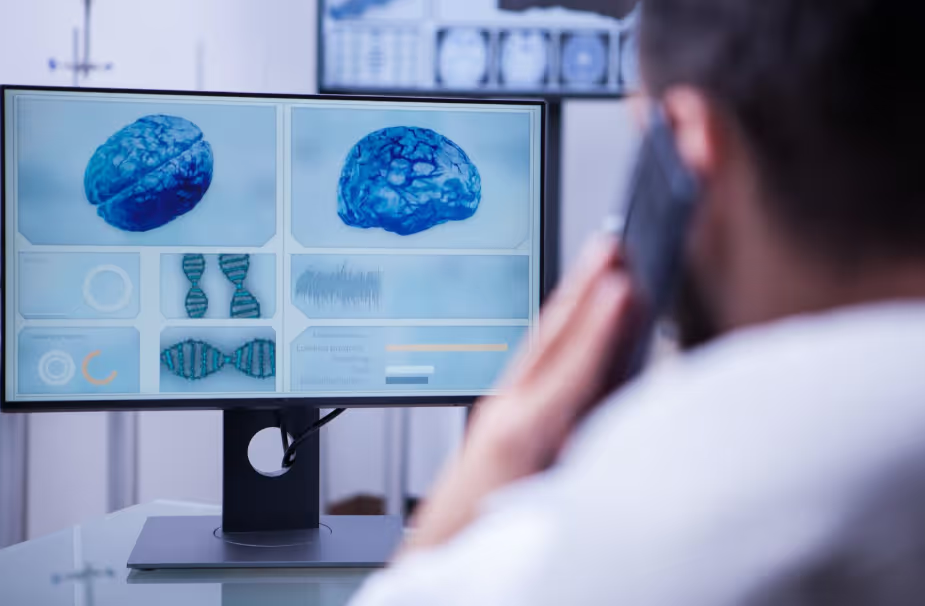
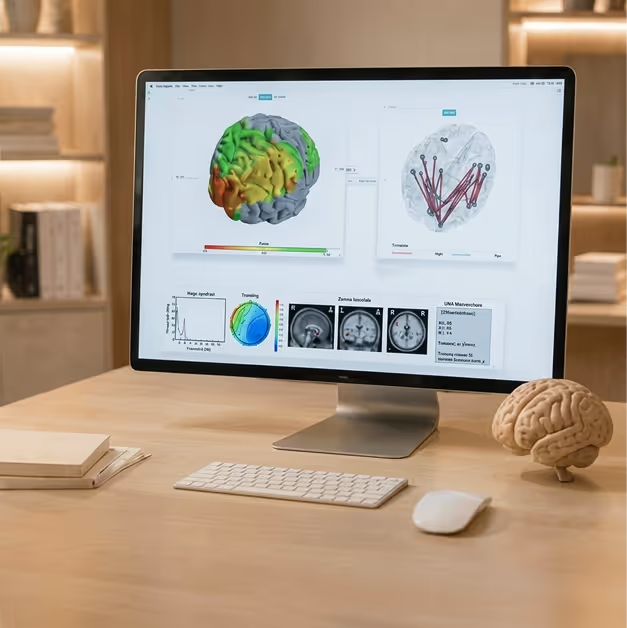
Neurophysiology: QEEG and Brain Mapping
A map of brain function - the foundation for selecting neurofeedback and other technologies.
Genetic diagnostics
Karyotyping, microarrays, exome sequencing, genome sequencing, pharmacogenetics, polymorphisms, family segregation analysis.

Metabolic diagnostics
Vitamins, minerals, amino acids, organic acids, inflammation markers, and nutritional status indicators.

Gut microbiome analysis
Microbiota assessment for GI symptoms, food selectivity, and behavioral fluctuations.

Heavy metals and toxicology
Evaluation of toxic load based on clinical and environmental indications.

Omega profile and nutritional status
Fatty acids, amino acid balance, and status of key nutrients for neurometabolism.
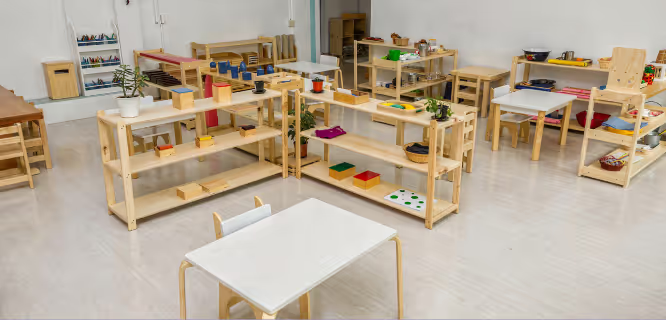
Development check-up for neurotypical children
Profiling neuropsychological assessment for healthy children: strengths and areas for growth.


What gets missed with narrow, point-by-point diagnostics
Key cases we see in practice every month.

«The inattentive child»
Complaint: inattentiveness at school. A brief consultation might lead to an ADHD diagnosis.
With comprehensive diagnostics - we found iron deficiency, sleep disruption, and a language disorder. ADHD-focused therapy would not have worked because the root cause was different.

«Speech delay»
Complaint: speech isn't developing. The standard path - speech therapy.
With comprehensive diagnostics - we identified sensory processing differences and reduced hearing in one ear. Without addressing hearing and sensory needs, speech therapy could stall for years.

«Behavioral challenges»
Complaint: the child is aggressive and hard to manage. A superficial assessment might label it a behavioral disorder.
A full profile revealed high-functioning ASD + GI issues + chronic sleep deprivation. The treatment plan - completely different.
How long does comprehensive diagnostics take?
Duration depends on scope: the basic clinical and neuropsychological part takes 1–2 weeks; expanded diagnostics (including genetics and metabolism) take 3–6 weeks.
Basic module
1–2 weeks · 3–5 sessions · clinical assessment, neuropsychology, speech, sensory processing, motor skills.
1–2 weeks
Expanded module
3–6 weeks · adds genetics, metabolism, microbiome - subject to laboratory turnaround times.
3–6 weeks
Case conference and conclusion
Within 1–2 weeks after all results are received. Families receive a comprehensive report and individualized plan.
Conclusion
8 packages for typical cases
If the primary hypothesis is clear - there are ready-made packages with a fixed set of assessments. More convenient and budget-predictable.
What you receive in the end
Why parents choose KidiMind
Comprehensive report
A structured document: your child's profile across all assessed domains, diagnoses or working hypotheses, differential analysis, and rationale for conclusions.
Individualized therapy plan
Specific goals, therapy modules, visit frequency, effectiveness criteria, and re-evaluation timelines.
Recommendations for the family
Home routines, nutrition, sleep, environment. What to do daily to support progress.
Recommendations for school
When needed - a separate document for educators: accommodations, pacing, material delivery format, behavioral strategies.
What we don't do
We don't prescribe «everything at once»
Only what is justified by clinical hypotheses. No unnecessary tests just to increase the bill.
We don't diagnose based on a single scale
A diagnosis is a combination of data and observations across multiple settings. One test doesn't decide.
We don't treat what isn't there
If diagnostics show that active therapy isn't needed - we'll say so honestly and provide recommendations only.
Start with understanding
Book an initial consultation.
In one visit, we'll take a full history, outline clinical hypotheses, and propose a specific diagnostic pathway - nothing extra, no guesswork.
Carrer Viladomat 135, 1-1, Eixample, 08015, Barcelona
Mon-Fri 10AM-6PM
Mon-Fri 10AM-6PM