


From in-depth diagnostics to comprehensive therapy — all under one roof
Treatment of congenital metabolic disorders in children in Barcelona
At KidiMind, we manage children with metabolic disorders through an integrated medical and nutritional pathway. One center brings together a clinical geneticist, epileptologist, rare disease specialist, nutritionist, and rehabilitation specialist. Families with orphan diagnoses receive not fragmented consultations, but a team that sees the child as a whole and provides long-term support.
Congenital metabolic disorders are a large group of rare diseases
Congenital disorders of metabolism (inborn errors of metabolism) are a group of more than 1,500 genetic conditions in which a defect in a single gene disrupts the function of a specific enzyme or transport protein. As a result, either substances that should be processed accumulate in the body, or essential compounds needed for normal cellular function fail to be produced.
Most of these conditions are classified as rare (orphan) diseases - each individually affecting approximately 1 in 10,000 to 100,000 children. But collectively, they impact a significant number of families, and many can be effectively treated - especially when diagnosed early.
The key principle: the earlier the condition is detected and specific treatment is started, the greater the chance of preserving the child's brain development and quality of life. This is why most countries have newborn screening programs - but these do not cover all conditions, and some children reach specialists only after symptoms appear.
Modern international approaches (SSIEM, ACMG) emphasise the importance of early recognition, precise molecular diagnostics, and long-term multidisciplinary support.
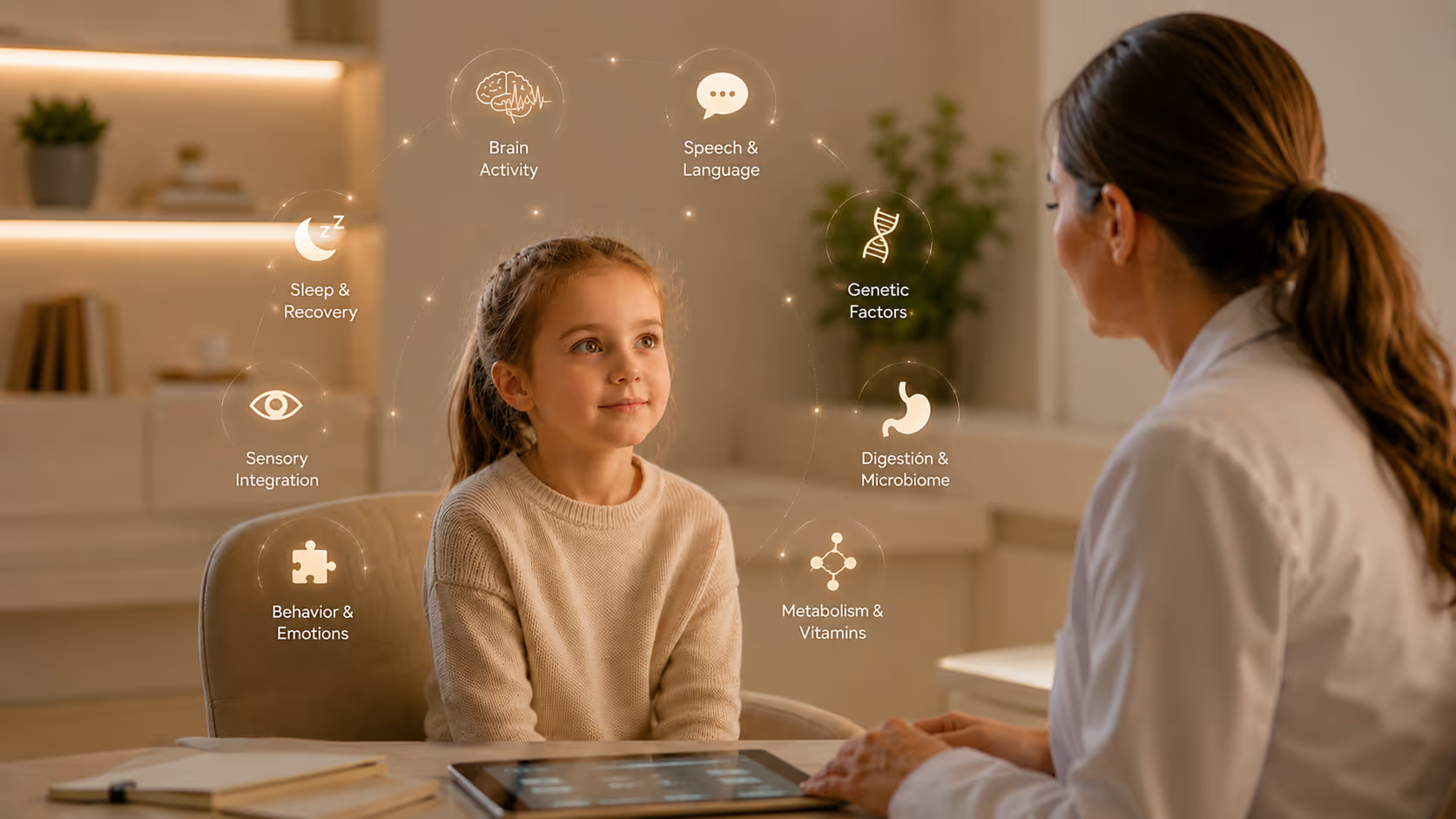

What types of metabolic disorders occur in children
The exact causes of ASD are not fully known. Modern science agrees on one point: autism is the result of the interaction of many factors, predominantly biological.
Amino acid metabolism disorders
Phenylketonuria (PKU), maple syrup urine disease, homocystinuria, tyrosinemias. Some of these are detected through newborn screening and are managed with specialised diets and amino acid formulas.
Carbohydrate metabolism disorders
Galactosemia, glycogen storage diseases, glucose transporter deficiency (GLUT1). These require specialised diets and feeding regimens; for some forms, the ketogenic diet is indicated.

Mitochondrial diseases
Defects in cellular energy production. Often present with muscle weakness, epilepsy, developmental delay, and vision or hearing impairment. Require nutritional support and individualised management.
Lysosomal storage disorders
Gaucher disease, Pompe disease, mucopolysaccharidoses, Fabry disease, and others. Some of these have enzyme replacement therapy available - meaning the condition can be controlled.
Signs that should prompt consideration of a metabolic disorder
These signs are not a diagnosis, but a reason to seek professional evaluation. One or two signs - monitor. A combination of several - book a consultation.

Newborns and infants
- unexplained lethargy, poor feeding, refusal to eat
- episodes of vomiting without apparent cause
- seizures in the first days or weeks of life
- unusual odour of urine or sweat (sweet, «maple syrup», musty)
- jaundice not explained by common causes
- muscle hypotonia or hypertonia
- poor weight gain


Toddlers (1–4 years)
- developmental regression - loss of previously acquired skills
- episodes of decompensation triggered by infections or fasting
- delays in motor and speech development
- seizures, especially those resistant to therapy
- pronounced facial features (coarse facies, growth abnormalities, skeletal changes)
- enlarged liver or spleen
- cardiac, renal, vision, or hearing abnormalities
- chronic muscle weakness and fatigue

Older children and adolescents
- episodes of worsening after physical exertion or stress
- chronic muscle weakness
- unexplained recurrent abdominal or muscle pain
- epilepsy poorly responsive to treatment
- progressive cognitive or motor decline
- family history of similar cases or early deaths in the family
Take the first step
Book an initial consultation. In one visit, we will gather the medical history, outline our hypotheses, and explain which pathway is needed specifically for your child.
Carrer Viladomat 135, 1-1, Eixample, 08015, Barcelona
Mon-Fri 10AM-6PM
Mon-Fri 10AM-6PM
How metabolic disorders differ from other conditions
Metabolic disorders require a fundamentally different approach than most paediatric conditions:
- Many are treatable - but treatment is specific: specialised diets, amino acid formulas, enzyme replacement therapy, cofactor support
- Time is critical - missed weeks or months in the early stages can lead to irreversible brain damage
- Each disease has its own protocol - there are no general recommendations «for metabolic disorders»; everything is determined by the specific defect
- Decompensation episodes - during infections, fasting, or stress, a child can deteriorate rapidly, and families need a clear action algorithm
- Lifelong monitoring - even with stable condition, regular check-ups, tests, and therapy adjustments are necessary
- Family risks - most conditions are inherited, and understanding risks for future children is essential
- Psychological burden on the family - a diagnosis of a rare disease changes the life of the entire family, and support must be long-term
The good news: the science of metabolic disorders is advancing rapidly. New medications, gene therapies, and expanded screening programs are emerging. What was considered a sentence 10 years ago is today a manageable chronic condition.

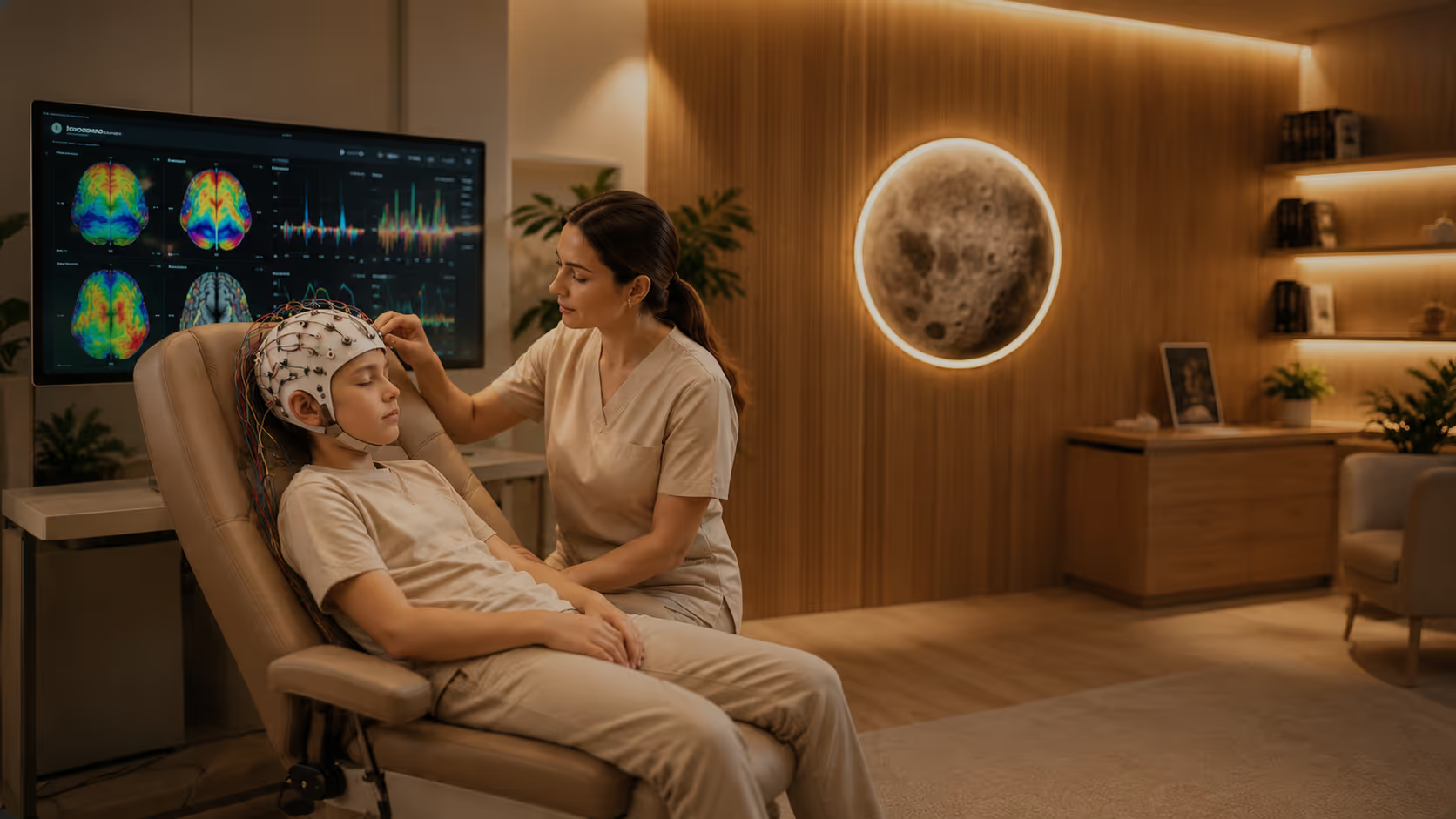
Metabolism is a child's entire life
When a child is diagnosed with a congenital metabolic disorder, the family faces a whole system of challenges that cannot be addressed within a single clinic:
- precise molecular diagnostics and confirmation
- specific medical treatment (diet, medications, enzymes)
- management of decompensation episodes
- daily nutritional support
- supporting the child's development (which is often affected)
- managing associated conditions (epilepsy, cardiology, orthopaedics, endocrinology)
- family genetic counselling
- psychological support for the family on this long journey
- coordination with patient associations and research centres
- addressing everyday, educational, and social matters
In the traditional model, all of this falls on the parents - they become «health managers» for their child. At KidiMind, we build a unified pathway where these tasks are handled by a dedicated team.
What we do differently
Individual pathway for each child: from correcting impairments to maximizing potential.

Expertise in rare and metabolic disorders
Our clinical director is a pediatric neurologist, epileptologist, and specialist in rare genetic and metabolic diseases, with doctoral training at Sant Joan de Déu. We have experience managing atypical cases and maintain connections with expert centres.
In-depth molecular diagnostics
Advanced metabolic profiling, exome and genome sequencing, targeted gene panels, pharmacogenetics. Not «general tests», but targeted investigation.
Specialised nutritional support
Not just a «dietitian», but comprehensive nutritional care that considers genetics, metabolic profile, pharmacokinetics, and the child's individual needs.
Team + family as a single unit
Long-term support for the entire family: from clear emergency algorithms to emotional support, from connections with patient associations to our guardianship program.
How we diagnose metabolic disorders
Diagnosing metabolic disorders is a multi-stage process. It begins with clinical hypotheses, continues with biochemical testing, and concludes with molecular confirmation.
Basic diagnostics (for everyone):
- Clinical assessment by a rare disease specialist - detailed history, family history, description of decompensation episodes, neurological examination
- Extended biochemical screening - blood and urine amino acids, urine organic acids, acylcarnitines, ammonia, lactate, pyruvate
- Analysis of key metabolic markers - ketone bodies, blood gas analysis, glycaemic profile during decompensation
- Vitamins and micronutrients - especially B12, folates, biotin, vitamin D, when cofactor-dependent forms are suspected
Advanced diagnostics (as indicated):
- Targeted molecular-genetic panels - when a specific disease group is suspected (e.g., epilepsies, mitochondrial, lysosomal disorders)
- Whole exome sequencing (WES) - for unexplained aetiology, syndromic presentations, or involvement of multiple systems
- Whole genome sequencing (WGS) - in complex cases or when exome sequencing yields no findings
- Family segregation analysis (trio testing) - to confirm variant significance and determine inheritance pattern
- Pharmacogenetics - when selecting safe and effective medication therapy is required
- Enzyme studies - when a specific deficiency is suspected (through specialised reference laboratories)
- Brain MRI and MR spectroscopy - when neurometabolic disorders are suspected
- Tissue diagnostics - muscle, skin, or liver biopsy in specialised centres (as indicated)
How we support children with metabolic disorders
The program is always individual - it depends on the specific condition. These are the core areas of our work.

Specialised dietary therapy
- Calculation and monitoring of diets for PKU, maple syrup urine disease, tyrosinemias
- Ketogenic diet for mitochondrial disorders, GLUT1 deficiency, drug-resistant epilepsy
- Low-protein, low-fat, low-carbohydrate protocols - as indicated
- Selection and monitoring of amino acid formulas and medical formulas
- Diet adaptation to age, activity level, and decompensation episodes
Medication and cofactor therapy
- Vitamins and cofactors for vitamin-dependent forms (B6, B12, biotin, folates)
- L-carnitine, creatine, coenzyme Q10 - as indicated for mitochondrial and other disorders
- Coordination of enzyme replacement therapy (where applicable)
- Monitoring and optimisation of already prescribed medications, taking pharmacogenetics into account
Emergency action plan
- Written protocol for actions during infection, vomiting, or fasting
- Clear criteria: when to call emergency services, what to tell medical staff
- Patient card with diagnosis and emergency measures
- Coordination with emergency departments for informed care upon arrival
Support for neuropsychological development
- Speech therapy for speech delays
- Cognitive rehabilitation
- Executive function training
- Psychological and educational support at school

Rehabilitation and motor development
- Physiotherapy and kinesiotherapy - especially important for mitochondrial and neurometabolic disorders
- Sensory integration and occupational therapy
- Work on muscle weakness and endurance
Associated conditions
- Coordination of epilepsy management (often co-occurs)
- Collaborative work with cardiologists, nephrologists, endocrinologists, gastroenterologists - through our network of partner clinics
- Adaptations for vision, hearing, or autonomic nervous system impairments
Behavioral and emotional support
- Play therapy, CBT
- Addressing the child's anxiety about their condition
- Music and art therapy for emotional relief
- Adolescent programs - accepting the diagnosis, transitioning to self-management
Work with families
- Family genetic counselling
- Parent education: understanding the condition and how to manage it
- Emotional support - especially in the first months after diagnosis
- Connections with patient associations and international communities
- Coordination with healthcare and social support systems
School support
- Informing the school about the condition and emergency measures
- Adaptations for academic workload and physical activity
- Coordination with the school nurse (if available)
- Assistance with meal organisation when a special diet is required
Guardianship program
- Metabolic disorders require long-term and often costly support
- Families in challenging financial situations may receive partial or full coverage through the KidiMind guardianship program
How often and for how long
No child receives «everything» - the plan is assembled based on the specific profile. This is a typical set of modules.
01
Intensity
At the start - intensive work: confirming the diagnosis, selecting diet and therapy, training the family (several visits in the first month).Then - scheduled visits every 1–3 months, laboratory monitoring according to the schedule for the specific condition.
02
Parent module
Mandatory and continuous. For metabolic disorders, parents are the primary daily «managers» of the child's condition: monitoring diet, observing, and responding to episodes.
03
Duration
Support is lifelong. The program is reviewed taking into account the child's age, development, changing needs, and new scientific evidence.
What changes as a result of support
The prognosis for metabolic disorders varies greatly - it depends on the specific diagnosis, timing of treatment initiation, and quality of ongoing care. But in most cases, systematic work yields tangible results.
We work to ensure that the child:
- stabilises biochemical markers within a safe range
- reduces or eliminates decompensation episodes
- preserves and continues cognitive and motor development
- can attend school or kindergarten with reasonable accommodations
- manages associated conditions (epilepsy, orthopaedic issues, etc.)
- has a family that knows what to do in any situation
- lives a full life within their biological possibilities
For some conditions (for example, PKU with early diagnosis), a child can develop completely normally and live to a ripe old age while adhering to the diet. For others, the goal is to maximise functionality and quality of life. We are honest with families about prognosis and work with what is realistically achievable.
Progress is tracked through biochemical markers, developmental scales, and observations from the family and care team.
Case from practice
A 2.5-year-old boy referred with a diagnosis of «psychomotor developmental delay of unspecified aetiology». At the time of consultation - delays in speech and motor skills, episodes of unexplained vomiting during infections (requiring hospitalisations), muscle weakness, increasing fatigue; parents had been seeing various specialists for two years without a diagnosis.
The standard path: Neurologist («developmental delay»), geneticist («karyotype normal»), gastroenterologist (vomiting attributed to «functional causes»), psychologist («just keep working with him»). No coordination between specialists.
What was done at KidiMind:
- Comprehensive clinical assessment with focus on «decompensation episodes»
- Extended metabolic screening: amino acids, organic acids, acylcarnitines
- Elevated levels of specific acylcarnitines detected
- Targeted molecular-genetic panel - confirmed a rare fatty acid beta-oxidation disorder
- Prescribed: specialised diet with frequent meals, L-carnitine, restriction of long-chain fats
- Created a written emergency protocol for the family and for the emergency department
- In parallel - rehabilitation program: speech therapy, physiotherapy, occupational therapy
- Family trained to recognise early signs of decompensation
- Connection established with an international patient association
Results after 14 months:
- Zero decompensation episodes (previously 4–5 per year requiring hospitalisation)
- Significant improvement in muscle strength and endurance
- Emergence of phrase speech
- Confident independent walking
- Child enrolled in an inclusive kindergarten
- Family feedback: «For the first time, we understand what is happening and know what to do»
Name changed, case published with written consent from the family.

Metabolic disorders are a long-distance journey
Families with children who have congenital metabolic disorders carry significant medical, nutritional, and often financial burdens - throughout the child's entire life. Specialised formulas, continuous monitoring, rehabilitation - these represent substantial expenses.
That is why KidiMind runs a guardianship program - providing support to families who cannot afford the full scope of care. If your family needs support, or if you would like to help others, we are open to conversation.
Frequently asked questions from parents about metabolic disorders
Every program module undergoes regular effectiveness checks. If a specific method does not yield the expected progress, we change it without waiting for it to «work someday».
Does newborn screening detect all metabolic disorders?

No. Screening programs vary between countries and typically cover the most common and well-studied conditions (for example, PKU, hypothyroidism, cystic fibrosis). Many rare metabolic disorders are not included in screening and are identified through clinical evaluation.
If the screening found nothing - does that mean there is no disorder?
Not necessarily. Screening only rules out specific conditions. If warning signs are present (see above), targeted diagnostics are essential - even with a normal screening result.
Are all metabolic disorders hereditary?
Yes, the vast majority are genetic. Most commonly, inheritance is autosomal recessive (from two healthy carrier parents), less frequently X-linked or mitochondrial. This means there are risks for other children in the family.
Can a metabolic disorder be «cured»?
Complete cure is possible for some forms - for example, with early diagnosis of PKU and lifelong adherence to the diet, a child can develop normally. For others, treatment focuses on managing the condition, preventing decompensation episodes, and maximising quality of life. Gene therapy methods are developing for an increasing number of conditions.
Is a lifelong diet necessary?
For many metabolic disorders - yes, a specialised diet is lifelong or very long-term. This may seem challenging, but with proper organisation and support from a nutritionist, it becomes a routine part of life.
What is a «decompensation episode» and why is it dangerous?
This is a sudden worsening of the child's condition due to a metabolic crisis (triggered by infection, fasting, or stress). Without prompt intervention, it can lead to irreversible brain damage or life-threatening complications. That is why we create a clear written action plan for every family.
Can we plan for more children?
Yes, absolutely - through genetic counselling. Prenatal and preimplantation diagnostic methods are available to help families at risk of recurrence.
Which specialists should manage the child?
Ideally, a team: a rare disease specialist (often a neurologist-geneticist), nutritionist, physiotherapist, speech therapist, and when needed, subspecialists (cardiologist, nephrologist, etc.). At KidiMind, this team works under one roof.
Do you accept Russian-speaking families?
Yes. Part of our team speaks Russian, Spanish, and English. All consultations are available in Russian.
When it comes to rare diseases, the right team makes all the difference
KidiMind is a team with extensive experience in rare and metabolic disorders, ready to walk this journey alongside your family. Book an initial consultation - in one visit, we will gather the medical history, assess the current situation, and propose a concrete plan for examination and long-term support.
Carrer Viladomat 135, 1-1, Eixample, 08015, Barcelona
Mon-Fri 10AM-6PM
Mon-Fri 10AM-6PM