


From comprehensive diagnostics to complete therapy - all in one center
A healthy child - a window of opportunity that won't come again
Brain plasticity in childhood is not a metaphor - it's a concrete biological state. Attention, speech, executive functions, and emotional regulation develop during sensitive periods - and the quality of this development shapes how a child will learn, communicate, and cope with stress throughout life.
For parents who want more than just «everything's fine»
This section is not about treatment or diagnosis correction. It's for families where:
- the child is developing typically, but you want to understand their strengths and areas for growth
- school is coming up, and you want to prepare your child in a structured way
- the child is growing up with two or more languages, and you want to support bilingualism thoughtfully
- you'd like to develop attention, memory, and self-regulation - but in a meaningful, evidence-based way
- you see great potential in your child and want to provide an environment where they can truly flourish
- the child gets tired from school, and you want to prevent burnout before it starts


We develop functions and skills - not subjects
An extracurricular class teaches a specific skill. A tutor helps with a subject. We work with the brain functions that everything else is built upon.
Extracurricular class / Tutor | KidiMind |
|---|---|
Teaches a specific skill: drawing, reading, counting | Develops basic functions: attention, memory, regulation |
Approach averaged for the group | Program based on neuropsychological profile |
Progress - teacher's subjective assessment | Progress - standardized scales and tests |
One format for everyone | Tailored combination based on strengths and weaknesses |
Result - a specific skill | Result - resilience to learning, stress, new challenges |
Development programs
Comprehensive and personalized programs adapted to your request

Development check-up
Once every 1–2 years - a neuropsychological profile of the child, strengths, areas for growth, and recommendations.
Ages 3 to 12

School readiness
School preparation program based on the child's profile: attention, regulation, graphomotor skills, phonology, motivation.
Ages 5–7

Executive Functions Club
Training in executive functions: planning, working memory, self-control, flexibility, organization.
Ages 6–14
Emotional competence
Recognizing and regulating emotions, empathy, conflict resolution, psychological resilience.
Ages 5–14
Program for bilingual children
Support for two languages, prevention of typical challenges, differentiation between «true» speech disorders vs. bilingual norm.
Ages 3 to 12
Attention, memory, thinking
Cognitive stimulation, neurofeedback, VR attention training, working memory protocols.Ages 6–14
Ages 3–12
Support for gifted children
Program for children with high potential: profiling, enriching environment, prevention of overload.
Ages 5–14
Prevention of school burnout
Work with children who feel exhausted by school: restoring motivation, regulation support, nutritional support, routine optimization.
Ages 7–16


Brain plasticity is not marketing - it's biology
A child's brain doesn't «mature on its own». It develops through constant dialogue with the environment, cognitive load, and experience. The more often neural pathways are activated, the more resilient they become. The more targeted the work, the more windows of opportunity can be leveraged.

Sensitive periods
Attention, speech, executive functions have biological windows of peak development. Missing them - does not mean «lost forever», but does mean «working later will be more difficult».

Neuroplasticity
Until age 12-14, the brain is especially receptive to structured stimulation. A well-designed program at this age yields results that are harder to achieve at 20.
Healthy brain and mind
Executive function training, neurofeedback, cognitive stimulation, and nutritional support - all methods aim to improve the functioning of the brain and nervous system.
What goes into an individual plan
The specific set is tailored to the child's profile. This is the basic «constructor» from which we build the program.

Executive function training
Planning, task initiation, working memory, self-control, flexibility.

Cognitive protocols and neurofeedback
Attention, switching speed, resilience to cognitive load, self-regulation.
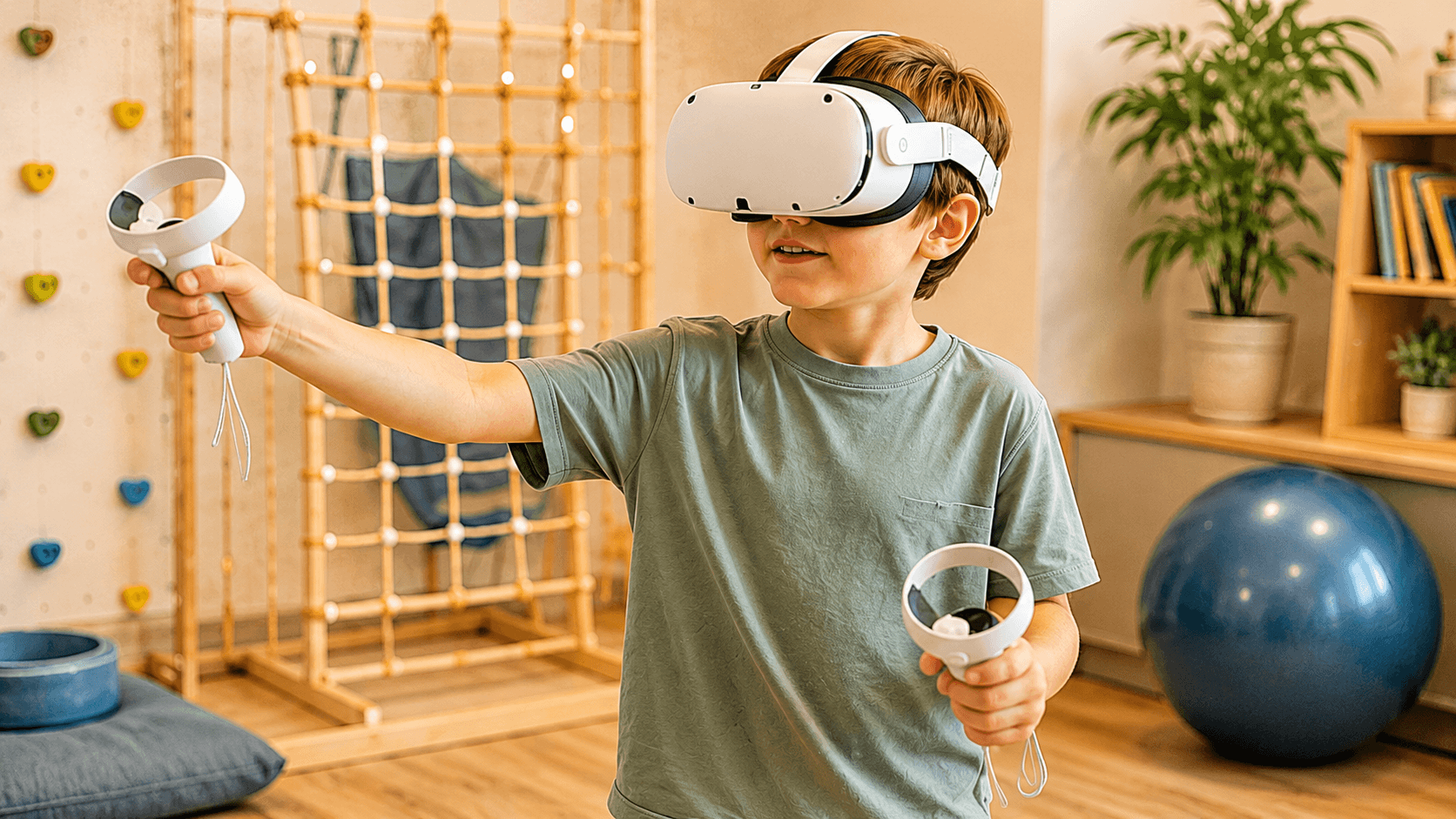
VR modules
Attention training, social scenarios, response to distracting stimuli - in a safe, game-like environment.
Sensory environment
Independence, daily living skills, activity organization, motivation.
Functional nutrition
Brain-supportive nutrition, sleep routines, stable energy levels, and when indicated - correction of deficiencies.

Parent workshops
Transferring skills to home: routines, household tasks, supportive environment.
How it works in practice
The specific set is tailored to the child's profile. This is the basic «constructor» from which we build the program.
Unlock your child's potential
Book a development check-up or an initial consultation. One conversation with our team - and you'll understand which functions to develop and which program is the right fit for your child.
Carrer Viladomat 135, 1-1, Eixample, 08015, Barcelona
Mon-Fri 10AM-6PM
Mon-Fri 10AM-6PM