


From in-depth diagnostics to comprehensive therapy - all in one center
Treatment and Support for Children with Genetic Syndromes in Barcelona
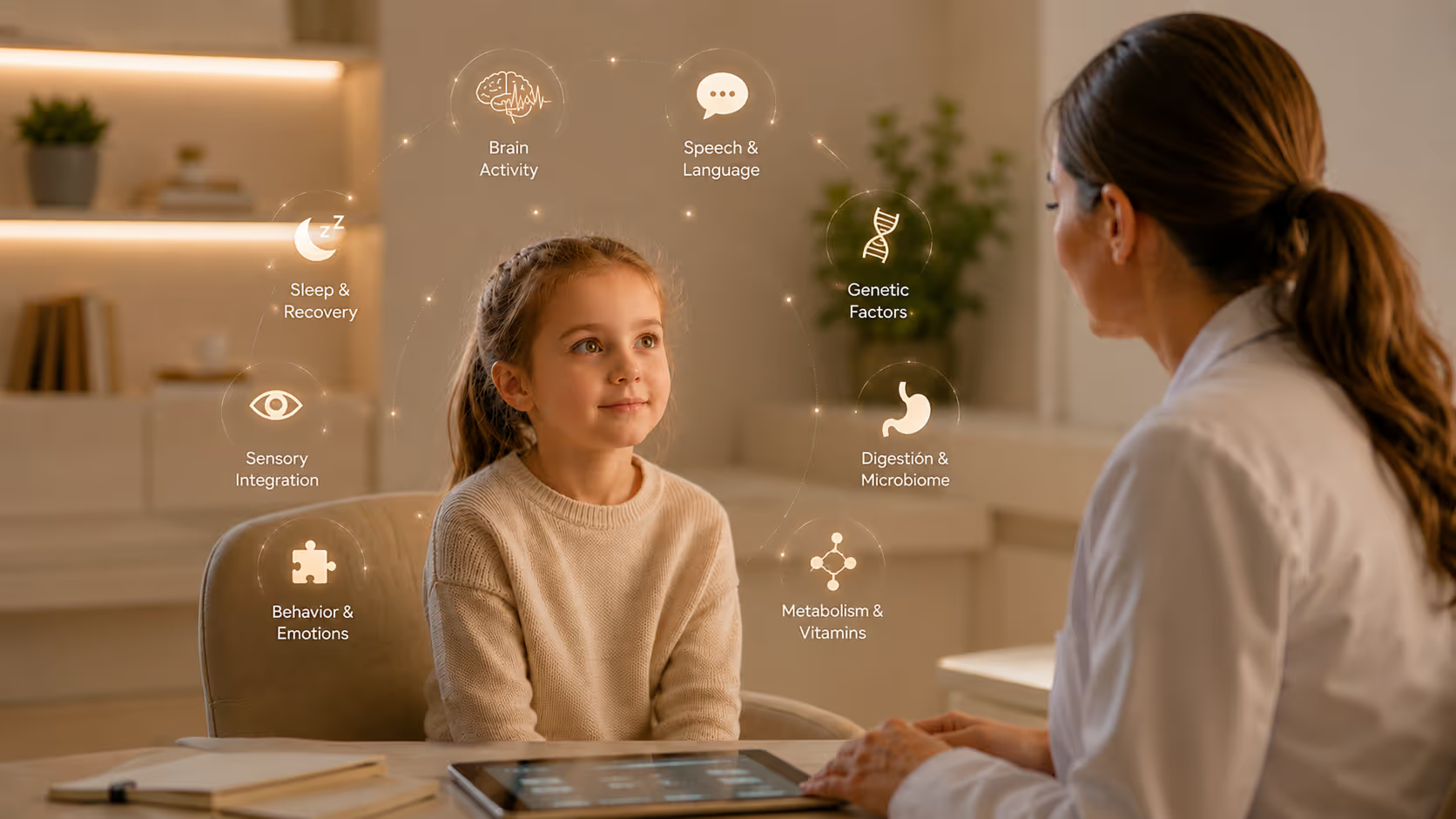
At KidiMind, a child with a genetic syndrome follows a unified medical and rehabilitation pathway. One center integrates genetic assessment, neurological care, speech therapy, motor skills development, cognitive support, behavioral therapy, nutrition, and metabolic management. Families no longer need to "piece together" care by coordinating with dozens of specialists across multiple clinics.
Genetic syndromes are a specialized medical and rehabilitation focus
Genetic and chromosomal syndromes are a group of conditions caused by changes in genes or chromosomes: Down syndrome, Rett syndrome, Angelman syndrome, Fragile X syndrome, Williams syndrome, Prader-Willi syndrome, and many others, including rare monogenic disorders.
Their distinguishing feature is that the child simultaneously needs medical management (somatic features, comorbid conditions), a developmental pathway (cognitive, speech, motor, and behavioral development), and long-term family support.
Modern genetic guidelines (ACMG) emphasize the importance of early and more in-depth molecular diagnostics in children with developmental delays, intellectual disability, and congenital features. This allows for a more accurate understanding of prognosis, risks, pharmacological safety, and the development of a long-term strategy.

Which genetic syndromes we support
We work with a wide spectrum of genetic conditions - from common syndromes to rare monogenic disorders.
Down syndrome (trisomy 21)
The most common genetic syndrome. A program focused on developing cognitive, speech, motor, and social skills, management of associated medical conditions, and nutritional support.
Rett syndrome
Predominantly affects girls. A complex profile involving skill regression, epilepsy, and motor and communication difficulties. Requires particularly careful multidisciplinary work and AAC.

Angelman syndrome and Prader-Willi syndrome
Imprinting disorders of chromosome 15 with opposite phenotypes. Each requires its own pathway - speech therapy, AAC, epilepsy management, behavioral support, and nutrition.
Fragile X syndrome, Williams syndrome, and rare syndromes
Including syndromes identified through exome or genome sequencing. Each has its own profile of cognition, speech, behavior, motor skills, and associated conditions.
Why precise genetic diagnostics matter
Unlike other conditions, in genetic syndromes a diagnosis is not just a "label" but a tool that changes the entire course of a child's care.
Precise genetic diagnostics allows you to:
- understand prognosis and set realistic developmental expectations
- predict and monitor associated conditions (epilepsy, heart defects, endocrine disorders, orthopedic issues)
- account for pharmacogenetics - which medications are effective and safe specifically for this syndrome
- gain access to syndrome-specific therapy programs (for example, enzyme replacement therapy for certain conditions)
- plan family health - recurrence risks, screening of relatives
- connect the family with communities - patient associations, research protocols
Important note: even if a child already carries a general diagnosis ("developmental delay", "ASD"), modern approaches recommend considering exome/genome sequencing when additional features are present (dysmorphic features, seizures, regression, family history). Often, this changes the entire support strategy.

A genetic syndrome is not just medicine and not just rehabilitation
Families with genetic syndromes usually know this picture by heart: a neurologist in one clinic, a geneticist in another, a speech therapist in a third, a physiotherapist in a fourth, a psychologist separately, a dietitian somewhere else. No one sees the child as a whole, and coordination falls on the parents.
At KidiMind, we build a unified pathway where the following work simultaneously:
- neurological management and monitoring
- genetic interpretation and strategy updates when needed
- developmental program - speech, motor skills, cognition, behavior
- sensory and motor rehabilitation
- AAC and communication - especially for conditions with limited verbal speech
- nutrition and GI management
- coordination with other specialists (cardiologist, endocrinologist, orthopedist)
- long-term family support
This is especially valuable for rare and complex syndromes, where finding a team that understands the specifics is often a challenge in itself.
What we do differently
Individual pathway for each child: from correcting impairments to maximizing potential.

Expertise in rare syndromes
The center's clinical director is a specialist in rare genetic and metabolic diseases, a doctoral candidate at Sant Joan de Déu. We have experience managing complex and atypical cases.
One center - the whole team
Neurologist, geneticist, speech therapist, physiotherapist, nutritionist, psychologist, AAC specialist - all under one roof, with regular case conferences.
Realistic long-term plan
Not "magic", but a structured program with specific goals for a 3–6 month horizon, measurable progress, and review every 8–12 weeks.
Family support as part of the program
Parents receive not only recommendations but also emotional support, training, and resources for the long journey ahead. Including a guardianship program for families needing financial assistance.
Take the first step
Schedule an initial consultation. In one visit, we will gather the medical history, outline hypotheses, and explain which pathway is right for your child.
Carrer Viladomat 135, 1-1, Eixample, 08015, Barcelona
Mon-Fri 10AM-6PM
Mon-Fri 10AM-6PM
How we assess a child with a genetic syndrome
The goal is to build a complete profile of the child, taking into account syndrome-specific features, and select a program tailored to them - not just "to the diagnosis in general".

Basic diagnostics (for everyone):
- Clinical genetic assessment - need for syndrome-specific diagnostics, ES/GS, panels, phenotype clarification, long-term prognosis
- Neurological and developmental assessment - profile of cognitive, speech, motor, and behavioral functioning
- Adaptive and behavioral assessment - level of independence, communication, behavior, participation in family life
- Speech, AAC, and communication assessment - especially important for conditions with limited verbal speech
- OT, sensory and motor diagnostics - to build a program for participation, self-care, and regulation
- Physiotherapy diagnostics - hypotonia, gait disturbances, coordination, posture, endurance


Advanced diagnostics (as indicated):
- Molecular genetics - exome/genome sequencing, targeted panels, family segregation, pharmacogenetics
- Metabolic and nutritional block - deficiencies, nutrition, GI profile, energy, modifiable factors
- Microbiome and food tolerance testing - especially for children with significant GI complaints, selectivity, or sensitive metabolic profiles
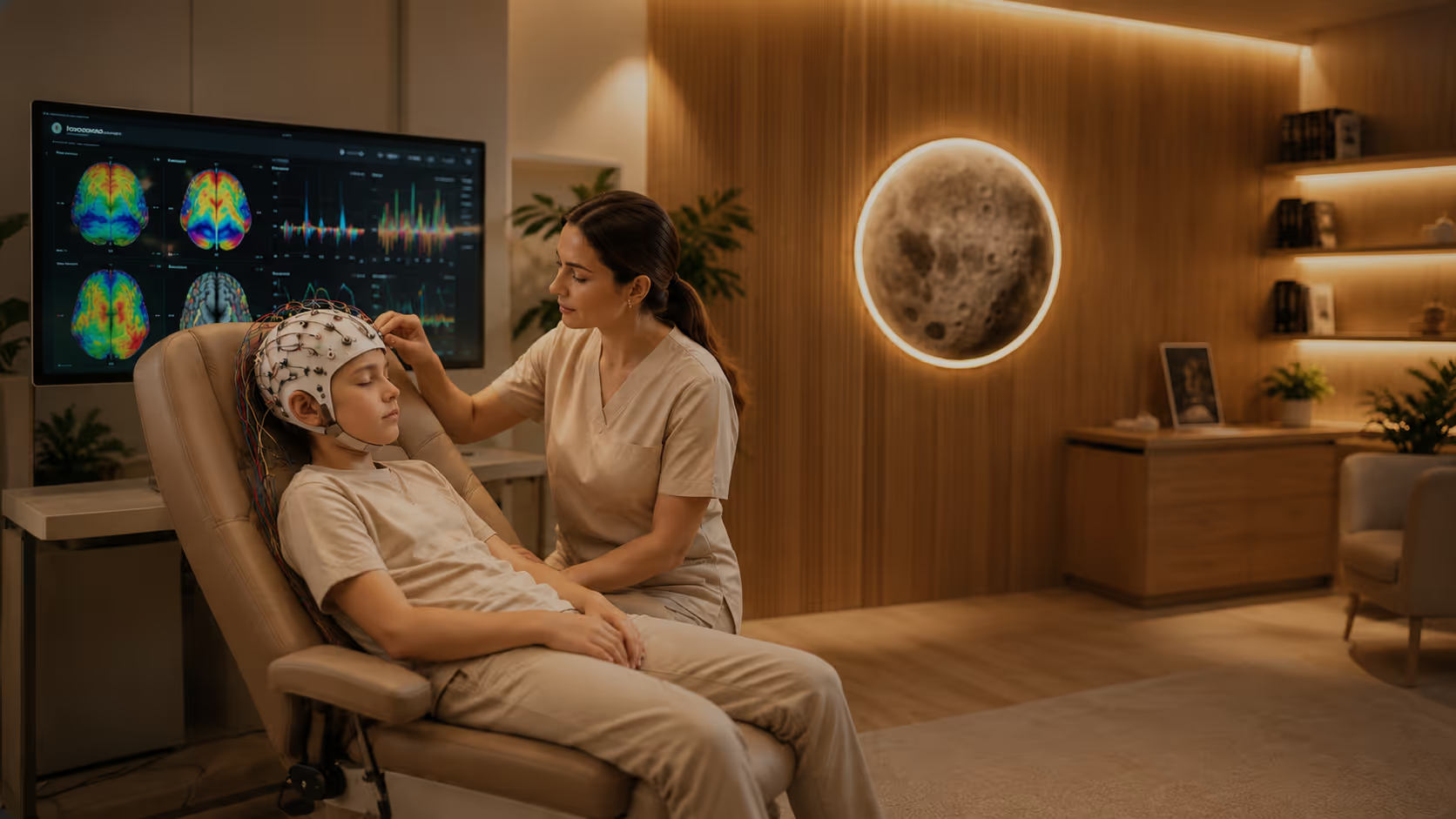
- QEEG and Brain Mapping - regulatory profiling, selection of adjunctive neuro-pathways
- Cardiological, endocrinological, orthopedic examination - as indicated by the specific syndrome (through partner clinics)
How we work with children with genetic syndromes
The program is tailored to the specific syndrome, age, and profile of the child. This is the basic set of modules.

Speech therapy and communication therapy
- Functional communication, social participation, everyday expressiveness
- Pragmatics, speech comprehension, expressive speech
- Developing speech to the maximum level possible for the child
AAC - Augmentative and Alternative Communication
- For severe speech impairment - access to communication, learning, social participation
- Cards, tablets, specialized apps, sign support
- Especially important for syndromes with limited verbal speech (Angelman, Rett, severe forms of Down syndrome)
OT, sensory integration and Montessori environment
- Daily living skills, regulation, praxis, participation in everyday life
- Independence at the maximum possible level
Kinesiotherapy and physiotherapy
- Hypotonia, gait, posture, endurance, motor maturation
- Especially important for Down syndrome, Rett syndrome, Prader-Willi syndrome
Cognitive rehabilitation
- Attention, learning capacity, sequencing, basic cognitive routines
- Adapted methods tailored to the child's abilities
Neurotechnologies (targeted use)
- Neurofeedback - for attention and regulation
- VR modules - social, motor, and cognitive training
- tDCS and photobiomodulation - in complex individual plans for neuroplastic support
Functional nutrition
- Personalized nutrition taking into account syndrome-specific features
- Stabilization of energy, weight, and GI functioning
- Addressing food selectivity (common in many syndromes)
Deficiency correction
- Vitamins, minerals, amino acids - based on assessment results
- Consideration of pharmacogenetic features specific to the syndrome
Microbiome correction and food intolerance management
- Reducing GI burden and somatic discomfort that interferes with development
Music and art therapy
- Enhance engagement, emotional connection, communication, and motivation
- Especially effective for syndromes with speech limitations
Parent coaching and long-term support
- Helping families maintain a realistic, sustainable, and developmentally supportive home environment
- Connection with patient communities and resources
- Emotional support for the long journey ahead
How often and for how long
No child receives "everything" - the plan is assembled based on the specific profile. This is a typical set of modules.
01
Intensity
2–4 visits per week. For complex profiles - a more intensive mixed program.
02
Parent module
Mandatory and continuous. In genetic syndromes, the family is the primary carrier of the developmental environment for the child.
03
Duration
Support is long-term - spanning years. The program is reviewed every 8–12 weeks, while the overall pathway is planned years ahead, aligned with developmental stages.
What changes in our work
With genetic syndromes, honesty with the family is especially important.
We do not "cure" the syndrome - it is part of the child's genetic constitution. But we significantly improve functionality and quality of life.
We work to ensure the child:
- develops available communication methods (speech or AAC) to the maximum possible level
- acquires daily living skills and independence
- gains control over associated medical conditions
- better regulates state, behavior, and sleep
- participates in social life - kindergarten, school, groups
- maintains and develops motor function
- has stable nutrition and comfortable GI functioning
Equally important is the outcome for the family: the ability to live a full life, have support, avoid burnout, and feel a team alongside them on this long journey.
Progress is tracked using specific scales every 8–12 weeks.
Case from practice
A 3-year-old girl with Angelman syndrome. At the time of consultation - no speech, pronounced ataxic gait, epileptic seizures, sleep disturbances, significant GI difficulties, parents in a state of severe emotional exhaustion.
The standard path: a neurologist in one clinic (epilepsy), a speech therapist in another (once a week), a physiotherapist in a third, a gastroenterologist in a fourth. Coordination falls on the parents, no one sees the case as a whole.
What was done at KidiMind:
- Full multidisciplinary assessment with updated genetic strategy (precise mutation, pharmacogenetics)
- Coordination of epilepsy therapy with the neurologist and selection of a protocol tailored to the syndrome
- Introduction of AAC at this early stage - cards and a tablet app so the child could express basic needs
- Kinesiotherapy focused on gait and stability
- Speech therapy focused on speech comprehension and nonverbal communication
- Sensory integration and sleep work
- Nutritional correction: microbiome, deficiencies, GI management
- Music therapy - a particularly responsive domain for children with this syndrome
- Emotional support for parents, connection with the international patient community
Results after 12 months:
- Reduced seizure frequency and stabilized epilepsy therapy
- Confident independent walking
- Active use of AAC - around 30 basic functional "words"
- Restored sleep
- Significant improvement in GI condition
- Family: "For the first time, we are not alone. We have a team."
Name changed, case published with written consent from the family.

Frequently asked questions from parents about genetic syndromes
Every program module undergoes regular effectiveness checks. If a specific method does not yield the expected progress, we change it without waiting for it to "work someday".
My child has developmental delays, but no diagnosis. Should we do genetic testing?

Often - yes. In cases of global developmental delay, dysmorphic features, seizures, regression, or family history, current international guidelines (ACMG) recommend considering exome sequencing. The decision is always made during a consultation after clinical assessment.
What does a precise genetic diagnosis change?
A lot. Understanding prognosis, monitoring associated conditions, selecting safe and effective medications (pharmacogenetics), access to syndrome-specific therapy programs, family health planning, and connection with patient communities.
Do you work with rare syndromes?
Yes. The center's clinical director is a specialist in rare genetic and metabolic diseases, a doctoral candidate at Sant Joan de Déu. We have experience managing atypical and complex cases.
Can KidiMind be combined with specialists we already see?
Yes, and often this is the right approach. We can serve as the coordination center while keeping narrow specialists (cardiologist, orthopedist) at their clinics, aligning the overall strategy.
What is AAC and is it suitable for my child?
AAC is an augmentative and alternative communication system (cards, tablets, gestures).
Take the first step
Schedule an initial consultation at KidiMind. In one visit, our team will gather the medical history, outline clinical hypotheses, and propose a specific ASD diagnostic plan - nothing extra, no guesswork.
Carrer Viladomat 135, 1-1, Eixample, 08015, Barcelona
Mon-Fri 10AM-6PM
Mon-Fri 10AM-6PM