


From in-depth diagnostics to comprehensive therapy - all in one center
Treatment of Anxiety and Depression in Children in Barcelona
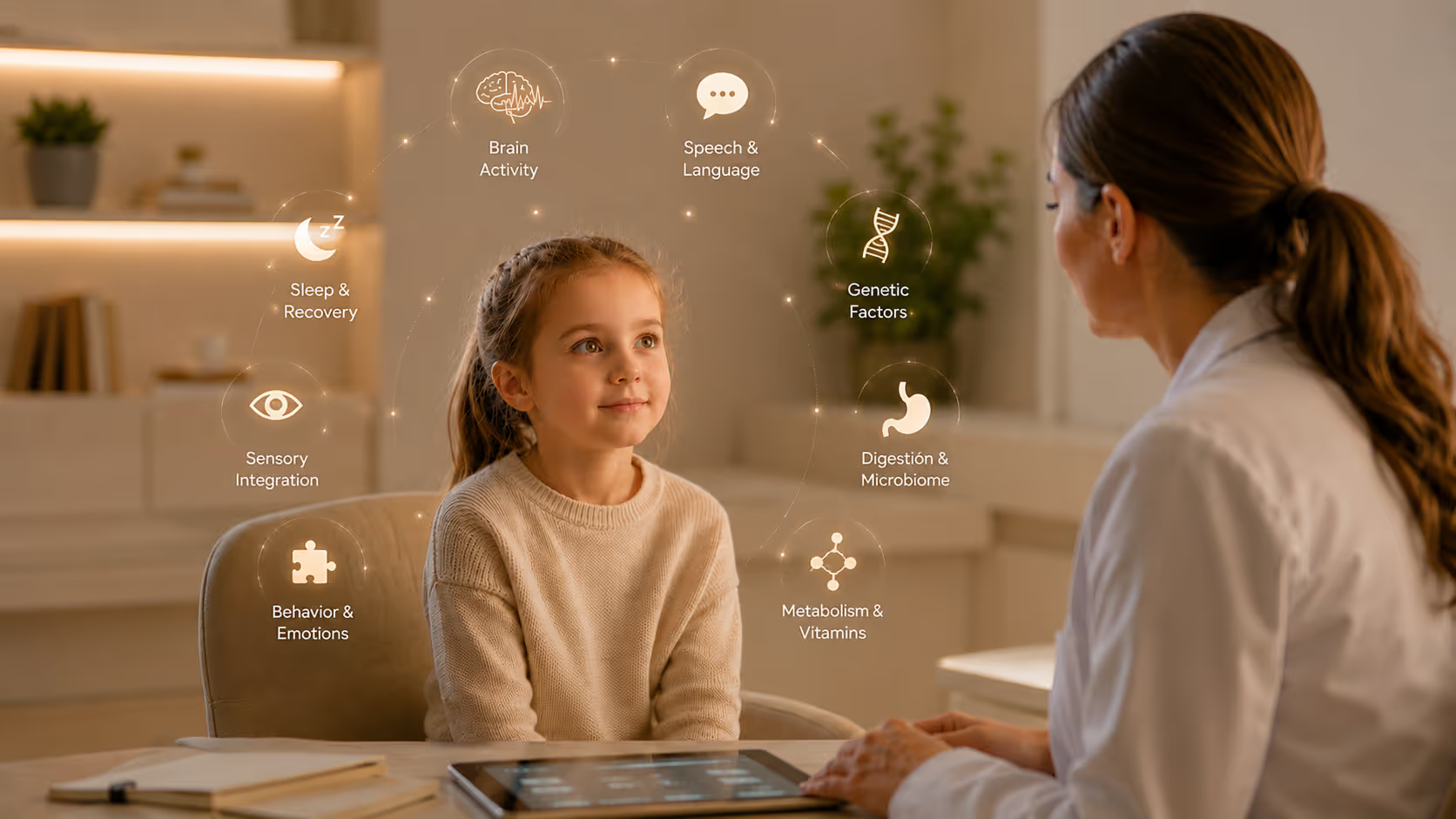
At KidiMind, we work with anxiety and depression not as «a separate psychological problem», but as a condition affecting the whole child. We combine psychotherapy, regulatory technologies, sensory work, nutrition, sleep and metabolic assessment - especially when anxiety or depression intertwine with neurodevelopmental features.
Anxiety and depression in a child - this is not «character»
Anxiety and depressive disorders are not «temperament traits» and not «they'll grow out of it». These are specific conditions that affect a child's sleep, school performance, motivation, physical well-being, behavior, relationships, and self-esteem.
In childhood, they often mask themselves: anxiety appears as «tantrums», «meltdowns», «stubbornness», school refusal. Depression in teenagers - as irritability, withdrawal, aggression, loss of interest in things that used to bring joy. Many families go for years not understanding what is happening, and try to «discipline» where therapy is needed.
International guidelines (NICE, AAP) rely on a stepped-care model, early psychotherapeutic support, and adapted CBT approaches, including for social anxiety.

Types of anxiety and depressive conditions in children
Children and teenagers may experience persistent worry, fear of social situations, difficulty separating from parents, or ongoing low mood. A professional assessment helps clarify these difficulties and identify the support each child needs.

Generalized anxiety
Constant worry «about everything» - school, health, parents, the future. The child cannot «turn off» anxious thoughts, sleeps poorly, complains of stomachaches and headaches.
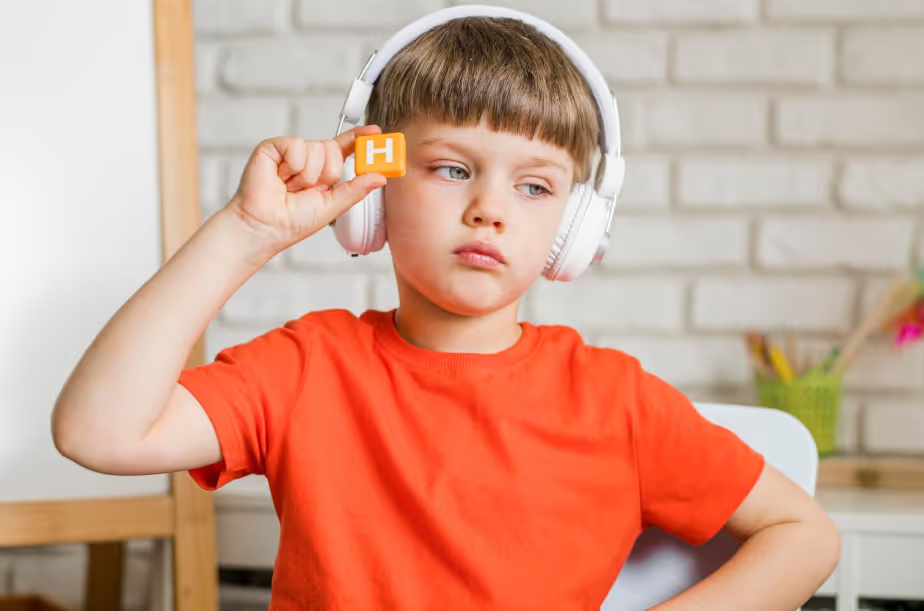
Social anxiety
Fear of evaluation, communication, public speaking. The child avoids company, refuses to answer in class, does not make phone calls. Often goes unnoticed from the outside - «just shy».
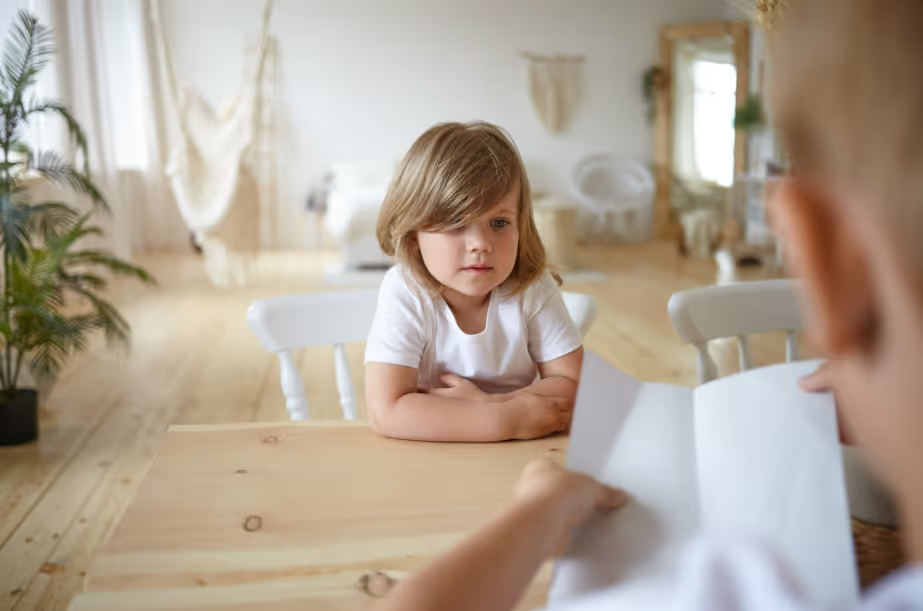
Separation anxiety and school refusal
Fear of separation from loved ones, refusal to go to school, somatic symptoms in the morning (nausea, fever, pain). Can be masked as «laziness» or «disobedience».
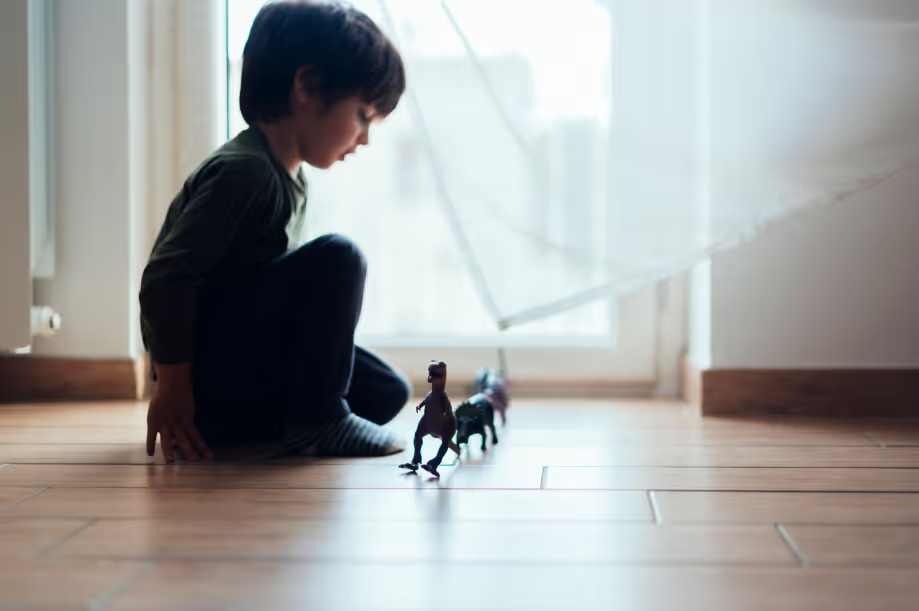
Depressive disorders
Loss of interest, depressed mood or irritability (especially in teenagers), sleep and appetite disturbances, feeling «everything is meaningless», reduced energy, in severe cases - suicidal thoughts.
Signs of anxiety and depression by age
These signs are a reason to seek a professional evaluation. In children, emotional disorders often appear as behavioral or somatic issues - it is easy to miss them, but important to notice in time.

Preschool age (3-6 years)
- Excessive fears (darkness, monsters, separation)
- Difficulty separating from parents
- Frequent complaints of stomachaches, headaches - without medical cause
- Sleep disturbances, nighttime awakenings, nightmares
- Excessive tearfulness, tantrums
- Developmental regression - asks to be held again, bedwetting


Primary school age (7-11 years)
- Refusal or strong reluctance to go to school
- Frequent somatic complaints in the morning
- Avoidance of tests, public speaking
- Perfectionism, fear of making mistakes
- Worry about loved ones' health
- Sadness, phrases like «I can't do anything», «I am bad»
- Loss of interest in games and friends

Teenagers (12+ years)
- Prolonged depressed mood or irritability
- Avoidance of school, friends, hobbies
- Sleep and appetite disturbances
- Decline in academic performance
- Withdrawal, secrecy
- Talks about life being meaningless (require immediate attention)
- Self-harming behavior - panic attacks
Take the first step
Book an initial consultation. In a single session, we'll gather your child's history, outline working hypotheses, and explain the support pathway that fits your child's unique needs.
Carrer Viladomat 135, 1-1, Eixample, 08015, Barcelona
Mon-Fri 10AM-6PM
Mon-Fri 10AM-6PM
What can underlie anxiety and depression in a child
Emotional disorders in children rarely have a single cause. Usually, a combination of factors work together, reinforcing each other.
Possible factors:
- Genetics and temperament - some children are biologically more sensitive to stress
- Neurodevelopmental profile - in children with ADHD, ASD, learning disorders, anxiety occurs significantly more often
- Sensory hypersensitivity - the world is «too loud» for the child's nervous system
- Family factors - parental stress, conflicts, anxious parenting style, excessive expectations
- School environment - chronic failure, bullying, overload
- Traumatic experiences - illnesses, losses, divorce, moving, emigration
- Biological factors - sleep disturbances, deficiencies in iron, vitamin D, omega-3, GI issues
- Hormonal changes - especially in teenagers
Important: Emigration, changing schools and language - a separate significant burden for Russian-speaking children in Barcelona. Often symptoms of anxiety or low mood arise precisely during this period - and require not «they'll get used to it», but targeted support.
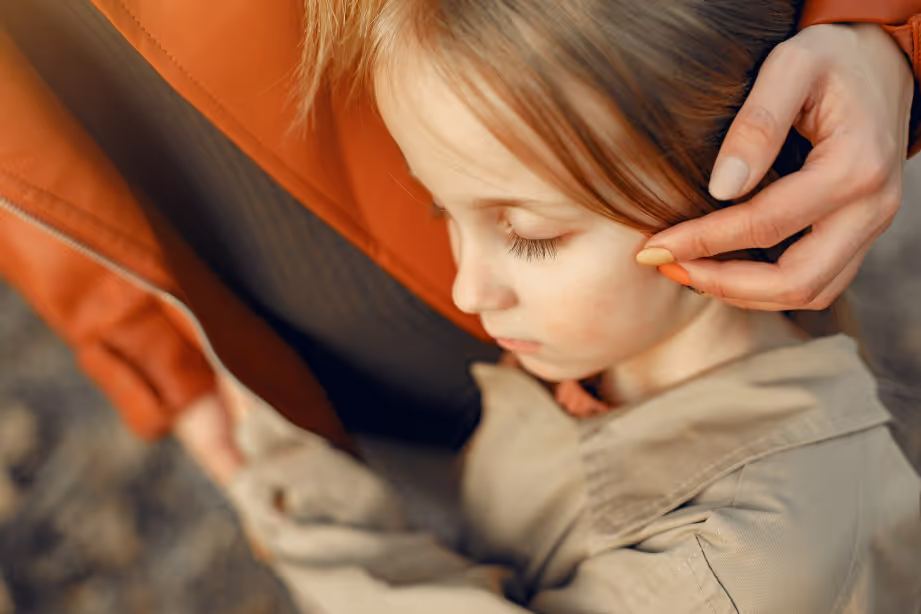
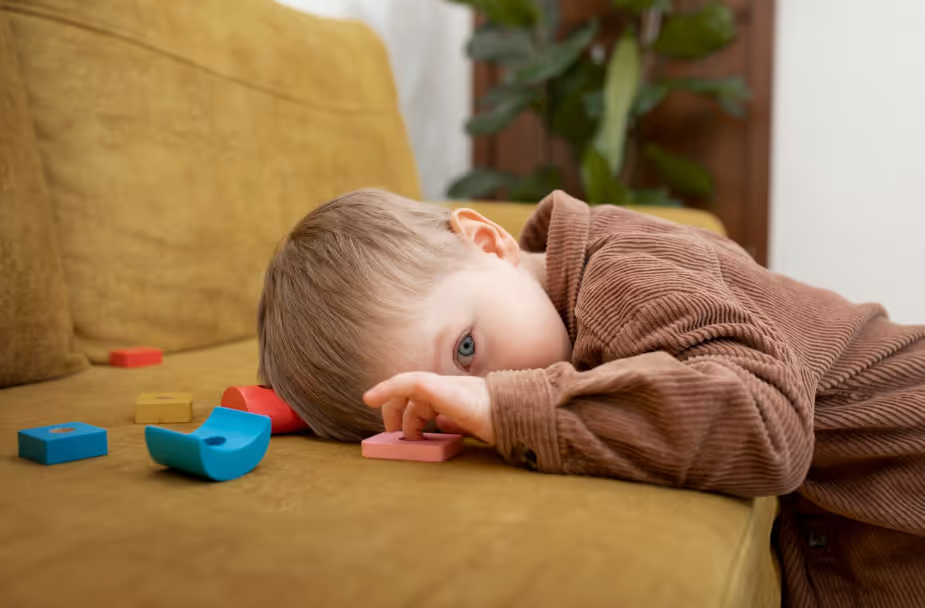
Emotions are not just about the mind
Anxiety and depression - this is a condition of the whole organism, not «just the head». In a child with anxiety, the heart rate really increases, the stomach hurts, sleep is disrupted, appetite changes. In a teenager with depression, energy levels really drop, circadian rhythms break down, brain biochemistry is altered.
That is why working only with talk therapy is not enough. For anxiety and depression, we simultaneously:
- conduct clinical and psychological assessment
- work with triggers and thought patterns (CBT)
- teach the body self-regulation (neurofeedback, breathing techniques)
- check sleep, nutrition, deficiencies, metabolism
- work with the family system
- coordinate with school
- when needed - involve psychiatric care
This is especially important for children whose anxiety or depression intertwines with ADHD, ASD, or learning disorders - that is, for a significant portion of cases we see.
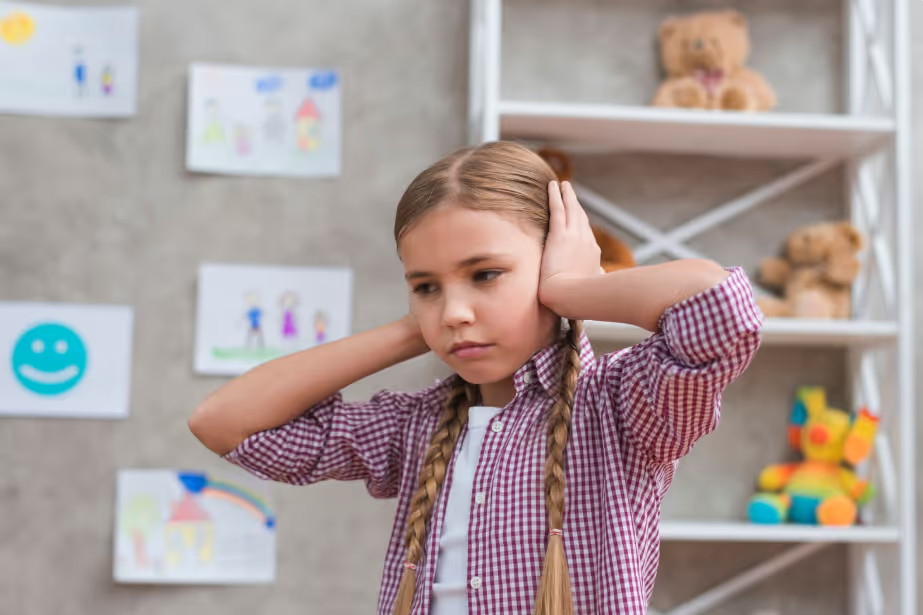
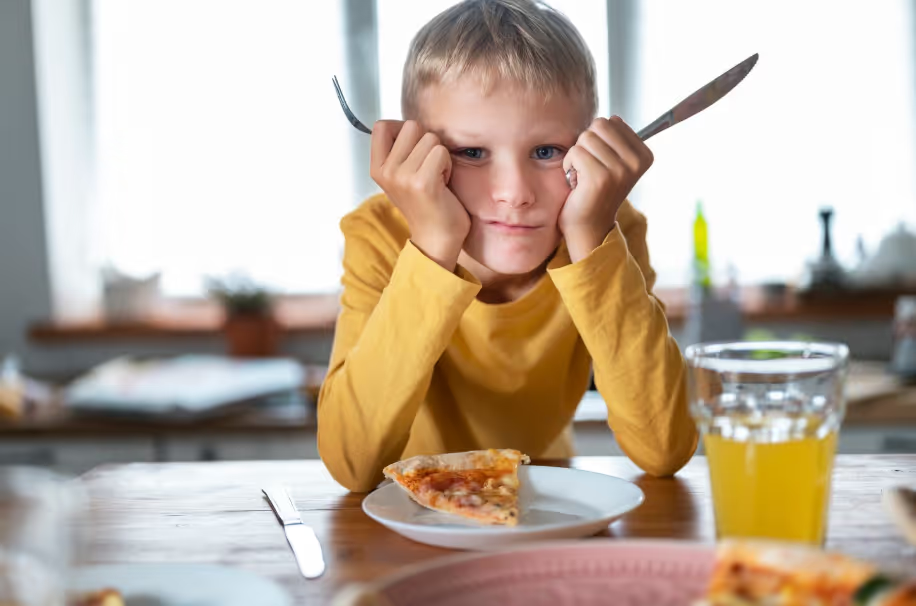
What we do differently
Individual pathway for every child: from addressing challenges to maximizing potential.

Not only psychotherapy, but also body regulation
CBT - the foundation, but we add neurofeedback, sensory work, VR exposure, breathing techniques - things that directly train the nervous system.
Biological layer
Sleep, appetite, deficiencies, metabolism, GI - we do not ignore what amplifies emotional state. Often correction of iron or sleep changes the picture more than it seems.
Family - co-author of the work
A child's anxiety often lives within the family system. We give parents tools to avoid reinforcing symptoms and to support the therapeutic effect at home.
School support
Especially for school refusal, social anxiety, after bullying - we help build a safe and gradual return to school.
How we diagnose anxiety and depression in children
The goal is not to «assign a diagnosis», but to understand the full picture: what amplifies the condition, which co-occurring factors are present, and what level of support is needed.
Basic assessment (for all children):
- Clinical psychological and psychiatric evaluation - confirmation of anxiety or depressive disorder, determination of severity, exclusion of other causes
- Risk assessment - school refusal, avoidance, suicidality (mandatory for teenagers), sleep, daily functioning
- Neuropsychological profile - contribution of attention, overload, cognitive rigidity, fatigue
- Sensory and developmental assessment - especially for children whose anxiety is amplified by sensory overload, autistic traits, low environmental predictability
- Family assessment - dynamics, resources, stressors
- School picture - when relevant, teacher observations
Extended assessment (when indicated):
- QEEG - to describe arousal patterns, anxious hyperactivation or inhibition, and to select a neurofeedback program
- Nutritional and metabolic panel - deficiencies in iron, vitamin D, omega-3, amino acids that affect mood, sleep, anxiety
- Assessment of food tolerance, microbiome and GI - for somatized anxiety, abdominal pain, unstable energy
- Sleep assessment - circadian rhythms, sleep quality, hormonal background
How we work with anxiety and depression
The program is always individual. A psychotherapeutic foundation is mandatory, and other modules are added based on the profile.

Cognitive-behavioral therapy (CBT)
- Core method for anxiety and depression in children and teenagers
- For social anxiety, NICE recommends individual or group CBT with psychoeducation, exposure, social skills training, and parent involvement
- Working with thoughts, feelings, behavior - concrete skills, not «talks about life»
Play therapy and emotional-regulation protocols
- Especially helpful for younger children who find it hard to work in a purely verbal format
- Emotions through play, drawing, symbols
Stepped-care model for depression therapy
- Psychotherapy, family work, behavioral activation
- When needed - psychiatric care
- Gradual return to activity and relationships
VR modules
- Controlled exposure for anxiety, social fears, avoidance
- Safe environment to practice challenging situations
- Especially effective for school and social anxiety

Neurofeedback
- Training a state of calm engagement
- Reducing hyperarousal, improving self-regulation
- The body learns «not to be in constant anxiety»
Music and art therapy
- Safe expression of emotions
- Reducing tension
- Especially helpful for children who find it hard to talk about feelings
Sensory integration and OT
- When anxiety sharply increases against a background of sensory overload and poor bodily regulation
Biomedicine and nutrition
- Functional nutrition - stabilizing sleep, appetite, energy, bodily resilience
- Correction of vitamin, mineral, amino acid deficiencies when confirmed
- Work with microbiome and GI profile - for somatized anxiety
tDCS and photobiomodulation (when indicated)
- Additional modules in individual regulation and mood-support programs
- Under medical supervision
Medication management (when needed)
- For moderate to severe cases, suicidal risk, or insufficient response to psychotherapy
- Prescribed by a psychiatrist, under monitoring
- Not «instead of» therapy, but alongside it
Parental support and groups
- Reducing anxiety across the whole family system
- Supporting the child's daily skills at home
How often and for how long
No child receives «everything» - the plan is built around their specific profile.
01
Intensity
1-3 visits per week depending on severity. Basic plan - 1 individual session is mandatory, other modules are added based on the profile.
02
Family module
Important. Especially for anxiety disorders in younger children - without working with parents, symptoms tend to return.
03
Duration
CBT program usually 12-20 sessions. After that - reassessment and decision whether to continue or switch to a maintenance mode.
What changes as a result of therapy
Anxiety and depression in children respond well to therapy - especially with early intervention. We work toward helping your child:
- fear situations less that previously seemed overwhelming
- cope with anxiety through concrete skills, not avoidance
- attend school and participate in groups more calmly
- sleep more consistently and wake up rested
- regain interest in activities, friends, hobbies
- begin to understand their own emotions and talk about them
- feel safe - within themselves and in the family
With depression, work takes longer and requires patience, but real progress is achievable. With panic attacks, school refusal, social anxiety, positive changes are often visible after the first 6-8 weeks.
Progress is tracked using standardized scales every 8-12 weeks.

Case from practice
10-year-old girl, moved to Barcelona with her family a year ago. At intake: refuses to go to school, every morning nausea and stomach pain, cries, clings to mom. At the Spanish school «everything is bad», no friends, says: «I want to go back».
Standard path prior to us: Pediatrician - «all tests are normal, this is adaptation, be patient». Psychologist once a week - «let's draw your fear». Three months - worsening.
What comprehensive diagnostics at KidiMind revealed:
- Separation anxiety + social anxiety against the background of emigration
- Severely disrupted sleep (falls asleep after midnight due to anxiety)
- Low iron and vitamin D levels (typical for first-year emigrants)
- Hidden mild language delay in Spanish, amplifying school stress
- Overall - a neurotypical child without other disorders
What was done:
- CBT focused on separation and social anxiety (12 sessions)
- VR modules for practicing school situations
- Sleep work: routine, sleep hygiene, neurofeedback
- Nutritional correction: iron, vitamin D, omega-3
- Spanish language support
- School module: contact with teachers, gradual return, «safe person» at school
- Parent coaching: how to support without reinforcing anxiety
Results after 4 months:
- Return to school without morning somatic symptoms
- Sleep restored (falls asleep at 9:30 PM)
- First friends appeared in class
- The girl said for the first time: «Barcelona is not so scary anymore»
- The family restored a normal rhythm of life
Name changed, case published with written consent from the family.
This is one of the common scenarios for Russian-speaking families in the first or second year of emigration.

Frequently asked questions from parents about anxiety and depression in children
Every module of our program is regularly reviewed for effectiveness. If a specific method isn't delivering expected progress, we adjust it - without waiting for it to «maybe work someday».
Is this «age-appropriate anxiety» or already a disorder?

Anxiety during certain periods (adaptation to kindergarten, school, moving) is normal and usually passes. A disorder is considered when the condition is persistent (more than 4-6 weeks) and significantly disrupts daily life - school, sleep, relationships, activity.
Can children have depression?
Yes, and more often than parents think. In children, it often manifests as irritability, behavioral difficulties, somatic complaints - not as «sadness» in its pure form. In teenagers - as withdrawal, loss of interest, conflicts.
Can we do without medication?
In most cases of mild to moderate severity - yes. Psychotherapy (CBT) is first-line treatment.
Medication is added for severe symptoms, insufficient response to CBT, or suicidal risk. The decision is always individual and discussed with the family.
What if my teenager refuses to see a psychologist?
This is a common situation. We work with this - we start with parent meetings to build a strategy, and gradually involve the teenager through topics that matter to them. Pressure almost always has the opposite effect.
My child is afraid of school because of emigration. Will it pass on its own?
Some children do adapt on their own. But if the condition lasts more than 2-3 months, the child refuses to go to school, or somatic symptoms appear - it is worth seeking help. The earlier - the easier and shorter the work.
When to seek urgent help?
• If the child talks about life being meaningless or not wanting to live
• If there is self-harming behavior
• If the child has stopped eating, sleeping, or leaving their room
• If a panic attack is not the first one
How does KidiMind work with anxiety in emigrant families?
We have experience working with typical adaptation scenarios - school refusal, language anxiety, loss of social circle. Part of our team is Russian-speaking, so the child can work in their native language.
Do you work with Russian-speaking families?
Yes. Part of our team speaks Russian, Spanish, and English. All consultations can be conducted in Russian.
Anxiety and depression respond well to treatment
The earlier the work begins - the faster the child returns to normal life. Book an initial consultation - in a single session, our team will gather your child's history, assess risks, and propose a support plan tailored specifically to your child.
Carrer Viladomat 135, 1-1, Eixample, 08015, Barcelona
Mon-Fri 10AM-6PM
Mon-Fri 10AM-6PM