


From in-depth assessment to comprehensive therapy - all under one roof.
ADHD Treatment for Children in Barcelona
At KidiMind, we view ADHD not simply as "can't sit still" or "can't focus," but as a unique profile of brain self-regulation. Our team builds a precise, comprehensive pathway - without vague advice to "just try harder" and without medication as the only solution.
ADHD is a neuroregulation disorder, not "bad parenting"
Attention-Deficit/Hyperactivity Disorder (ADHD) is a condition affecting attention, impulse control, and activity regulation that impacts a child's learning, behavior, organization, relationships, and emotional stability.
It is not the result of "bad parenting," laziness, or lack of discipline. In children with ADHD, brain systems responsible for concentration, impulse inhibition, working memory, and self-regulation function differently.
International clinical guidelines (DSM-5, NICE, AAP) emphasize the need for clinical assessment across multiple settings (home, school, extracurricular activities) and mandatory screening for comorbidities - because ADHD rarely occurs in isolation.
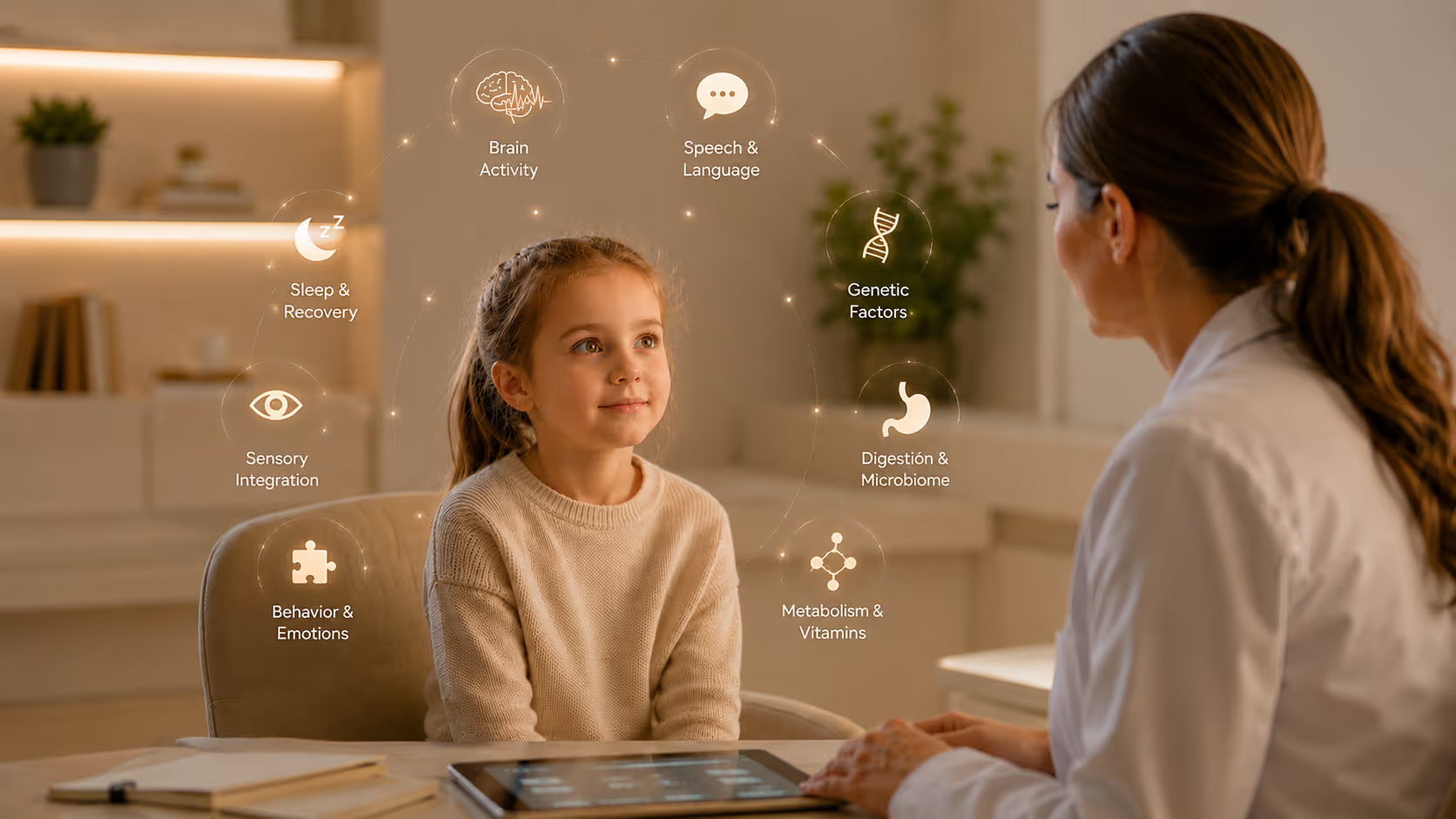

Signs of ADHD in children by age
These signs are not a diagnosis - but a reason to seek a professional evaluation. Important: ADHD symptoms must appear in at least two settings (home + school), not just one.

Preschool age (3–6 years)
- Cannot play one game for more than a few minutes
- Constantly «on the move», cannot sit still
- Quickly forgets instructions
- Acts impulsively - without pause or assessment
- Frequent tantrums and emotional «meltdowns»
- Injuries due to carelessness


Primary school age (7–11 years)
- Inattentive in class, loses belongings
- Does not complete tasks
- Finds it hard to sit at a desk
- Disrupts lessons, distracts others
- Messy handwriting, careless mistakes
- Struggles to make friends with peers
- Poor school performance despite good intelligence

Teenagers (12+ years)
- Chronic procrastination
- Forgets deadlines, loses homework
- Emotional swings, low self-esteem
- Conflicts at home and school
- Co-occurring anxiety or low mood
- Risk of addictions and risky behavior
Take the first step
Book an initial consultation. In a single session, we'll gather your child's history, outline working hypotheses, and explain the support pathway that fits your child's unique needs.
Carrer Viladomat 135, 1-1, Eixample, 08015, Barcelona
Mon-Fri 10AM-6PM
Mon-Fri 10AM-6PM
Three types of ADHD
Not all children with ADHD «run along the ceiling». One of the most commonly missed presentations is without hyperactivity.

Predominantly inattentive type
The child is calm but «heads in the clouds». Struggles to concentrate, gets easily distracted, loses things, forgets instructions. Often overlooked, especially in girls.
Predominantly hyperactive-impulsive type
Constant movement, impulsive actions, interrupts others, cannot wait. More often noticed early because it disrupts those around them.

Combined type
The most common. Combines inattention and hyperactivity. Requires a comprehensive program addressing both areas.
ADHD is not just about behavior
In children with ADHD, it is rarely «just ADHD». In most cases, co-occurring conditions are present that amplify symptoms:
- anxiety and depressive disorders
- oppositional defiant disorder (ODD)
- learning disorders - dyslexia, dyscalculia
- language disorders
- autism spectrum traits
- sleep disturbances
- tics and motor disorders
- deficiencies in iron, zinc, omega-3, vitamin D
- GI and microbiome imbalances that affect behavior
Prescribing only a stimulant or only a behavioral program means working only with the tip of the iceberg. Lasting results come from a precise, comprehensive approach.

What we do differently
Individual pathway for every child: from addressing challenges to maximizing potential.

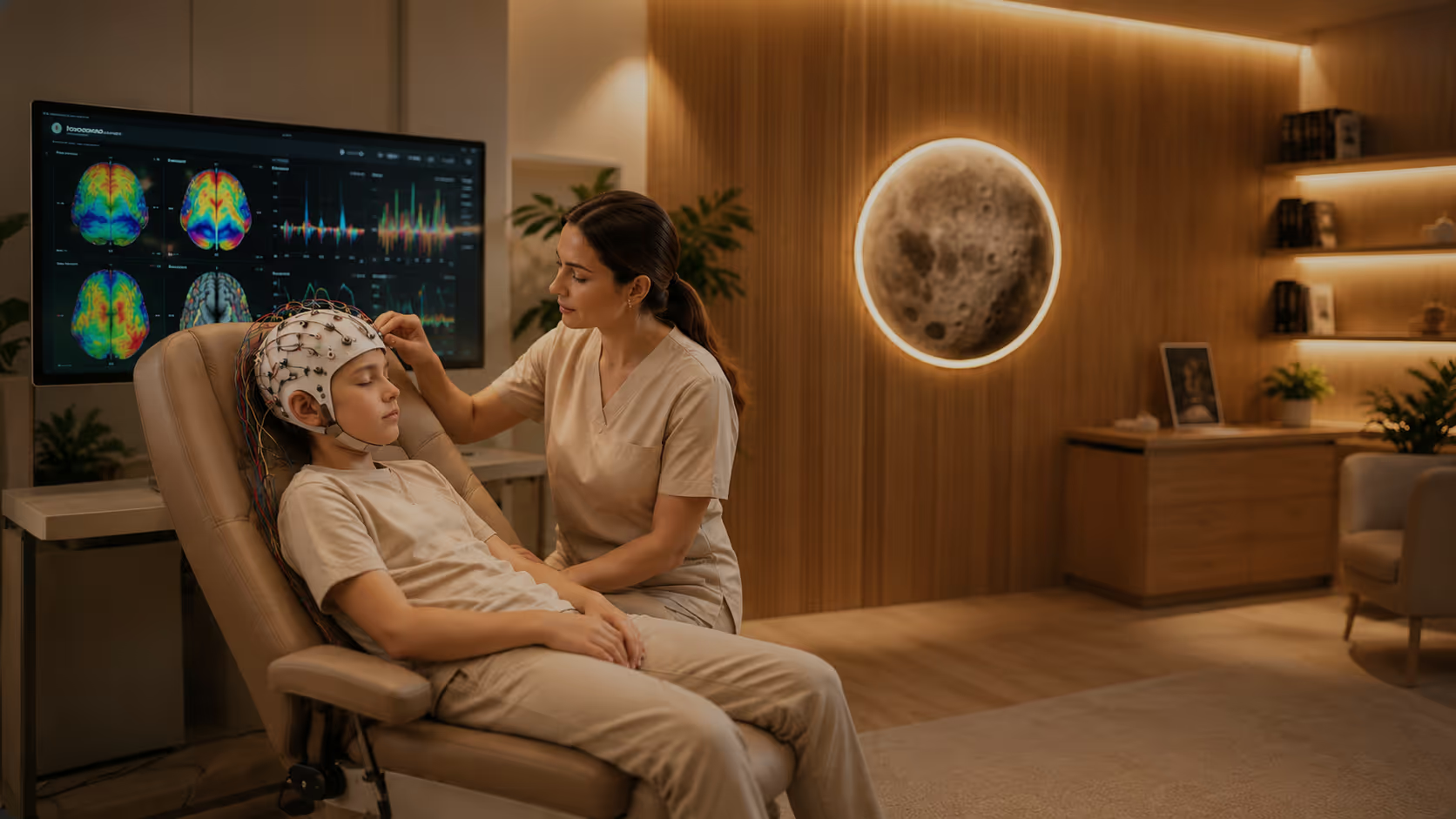
QEEG-guided program
Not «neurofeedback for everyone», but a precisely tailored protocol based on the specific child's neurophysiological profile.
VR and neurotechnology training
VR modules for attention training, neurofeedback for self-regulation, and when indicated - tDCS and photobiomodulation.
Biomedical layer
Analysis of deficiencies, nutrition, sleep, metabolism, microbiome - factors often ignored, yet they change the picture.
Family and school as one team
Parent coaching, school support, recommendations for teachers, coordination of all adults around the child.
How we diagnose ADHD in children
An ADHD diagnosis is not made based on a single scale or brief observation. It is always a combination of data from multiple settings.
Basic assessment (for all children):
- Clinical ADHD diagnosis - full developmental and psychosocial history, parent and teacher rating scales, mental status evaluation, level of functional impairment
- Neuropsychological evaluation and cognitive tests - attention, working memory, inhibition, planning, processing speed, error monitoring
- School functioning assessment - how exactly ADHD interferes with reading, writing, math, organization, behavior, and peer relationships in the classroom
- Comorbidity screening - anxiety, depression, ODD, learning disorders, language difficulties, autism spectrum traits, sleep disturbances, tics
Extended assessment (when indicated):
- QEEG and Brain Mapping - neurophysiological profile of attention, arousal, and self-regulation, basis for selecting a neurofeedback program
- Sleep and daily rhythm assessment - identifying factors that may worsen inattention and impulsivity
- Metabolic and nutritional panel - vitamins, minerals, amino acids when signs of fatigue, unstable energy, or food selectivity are present
- Food tolerance testing - for pronounced behavioral fluctuations and symptom-diet connections
- Microbiome and GI profile - for constipation, pain, bloating, or behavior-GI links
How we treat ADHD - a comprehensive program
Not a single method, but a coordinated program. The specific set is tailored to the child's profile.

Cognitive and neuropsychological work
- Executive function training - planning, self-control, task completion, time management, working memory
- Cognitive rehabilitation - error monitoring, switching speed, task strategy, school readiness
Instrumental neurotechnologies
- QEEG-guided neurofeedback - attention stability, error reduction, consistent self-control
- VR attention training - concentration, response to distracting stimuli, motivational engagement
- tDCS and photobiomodulation - as additional modules to support neuroplasticity
Motor skills and body awareness
- Motor and attention development protocols - especially for «motor restlessness» and poor bodily organization
- Helps the child «hold the body to hold attention»
Biomedicine and nutrition
- Functional nutrition - stabilizing diet, eating schedule, energy levels
- Correction of vitamin, mineral, and amino acid deficiencies
- Addressing food intolerance, microbiome, and GI load when indicated
Medication management (when indicated)
- Prescribed by a physician only when necessary, after comprehensive diagnosis
- Principles of rational prescribing, monitoring of effectiveness and tolerability
- Not as «the only tool», but as part of the program
Family and school support
- Family-focused corrective program - reducing impulsivity, daily structure, clear rules, feedback, reinforcement
- School module - recommendations for teachers, accommodations, support with workspace organization
- Parent coaching and group programs
Additional modules
- Psychotherapy for co-occurring anxiety or low self-esteem
- Music and art therapy for emotional expression
How often and for how long
No child receives «everything» - the plan is built around their specific profile. This is a typical set of modules used in ADHD support.
01
Intensity
1–3 visits per week. Typical pathway: 1 individual child module + 1 family module + when needed, 1 additional neurocognitive module.
02
Family module
Required. Without coordinated work between parents and school, the therapeutic effect does not consolidate.
03
Duration
Basic course - 10–16 weeks. Plan review every 8–12 weeks during the team's case conference.
What changes as a result of therapy
We work toward helping your child:
- sustain attention better and complete tasks
- react less impulsively and plan more effectively
- handle school demands more consistently
- regulate emotions better, with fewer meltdowns
- sleep more soundly and wake up rested
- feel successful - not like «the one who forgets everything»
And in parallel - so that the family experiences less stress and conflict at home, gains clear tools for support (from daily rituals to school strategies), and feels that everything is under control.
Progress is tracked using specific standardized scales - every 8–12 weeks.
Case from practice
9-year-old boy, ADHD combined type diagnosis. At intake: low school performance despite high intelligence, daily conflicts at home, anxiety symptoms, school avoidance, disrupted sleep, habit of «forgetting everything».
Standard path prior to us: Stimulant + behavioral recommendations from a psychologist once every two weeks. After one year - partial improvement in attention, but anxiety increased, the boy became «quieter, but sadder».
What we did at KidiMind:
- Comprehensive assessment - clinical evaluation, neuropsychology, QEEG, sleep assessment, metabolic panel, comorbidity screening
- Identified anxiety disorder, iron and omega-3 deficiency, disrupted sleep phases
- Program: CBT for anxiety + QEEG neurofeedback + executive function training + school support + nutritional correction + sleep work + parent coaching
- Stimulant adjusted for dosage and timing
Results after 4 months:
- Name changed, no photo used. Case published with written consent from the family.
- Return to school without avoidance
- Reduced anxiety (by scales)
- Improved self-regulation and sleep
- Emergence of sense of personal success
- Reduced family conflicts

Frequently asked questions from parents about ADHD in children
Every module of our program is regularly reviewed for effectiveness. If a specific method isn't delivering expected progress, we adjust it - without waiting for it to «maybe work someday».
At what age can ADHD be diagnosed?

Symptoms usually become evident around 4–6 years, but in some cases they appear earlier. Full diagnosis is possible from preschool age, especially with pronounced manifestations.
How much does ADHD diagnosis cost at KidiMind?
The cost depends on the scope of assessments. The basic clinical and neuropsychological package is the most accessible entry point.
Full pricing details are available in the «Prices» section.
Is medication mandatory for ADHD?
No. Medication is one of the tools, but not the only one. Many children do well with a program without medication (neurofeedback, CBT, executive function training, nutrition). The decision is always individual.
How is neurofeedback different from regular sessions with a psychologist?
Neurofeedback works directly with the brain's electrical activity through game-based feedback. The child learns to regulate their brain state, and the effect persists after the course ends. This is an evidence-based method with a strong scientific foundation.
Can ADHD «go away on its own» with age?
Some hyperactivity symptoms usually smooth out by adolescence. But attention deficits, impulsivity, and self-regulation difficulties in most cases persist - without intervention, they continue to interfere with school, relationships, and adult life.
Can therapy at KidiMind be combined with a school psychologist?
Yes. Moreover, we build work with the school as part of the program - we provide recommendations for teachers, help with accommodations, and coordinate approaches.
My child has ADHD + dyslexia. Do you work with this?
Yes. Comorbidity is the norm, not the exception. The program is built around the full profile, not a single diagnosis.
Do you work with Russian-speaking families?
Yes. Part of our team speaks Russian, Spanish, and English. All consultations can be conducted in Russian.
Take the first step
Book an initial consultation at KidiMind. In a single session, our team will gather your child's history, outline clinical hypotheses, and propose a clear, targeted ADHD diagnostic plan.
Carrer Viladomat 135, 1-1, Eixample, 08015, Barcelona
Mon-Fri 10AM-6PM
Mon-Fri 10AM-6PM