


From in-depth diagnostics to comprehensive therapy - all in one center
Treatment of epilepsy in children in Barcelona
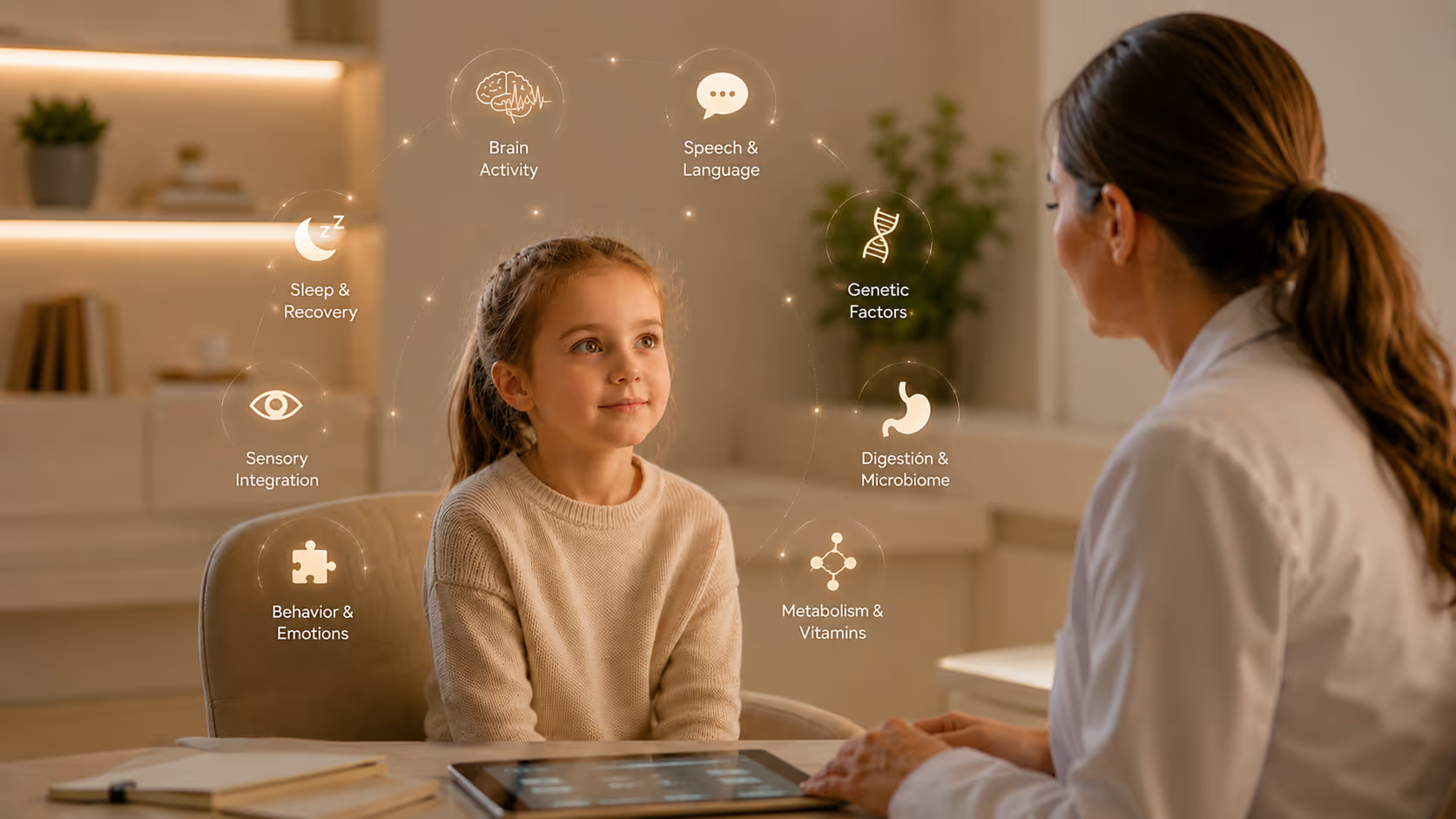
At KidiMind, we manage a child with epilepsy not as a «standalone neurological case» but as a comprehensive profile: an epileptologist, geneticist, nutritionist, neuropsychologist, and rehabilitation specialist work together on a single plan. We treat not only seizures but also support the child's development, learning, and overall quality of life.
Epilepsy is a chronic neurological condition, not a sentence
Epilepsy is a chronic neurological condition in which a child experiences recurrent epileptic seizures due to excessive electrical activity in the brain. This is not a «disease» in the traditional sense, but a group of different conditions with different causes, manifestations, and prognosis.
It is important to understand: a single seizure is not yet epilepsy. The diagnosis is made when there are two or more unprovoked seizures, or when specific EEG patterns are identified in combination with the clinical picture.
Modern international approaches (ILAE - International League Against Epilepsy) emphasise the need for precise diagnosis of the type of epilepsy and epileptic syndrome, identification of the cause, and individualised therapy selection. In most children, seizures are well controlled with proper treatment.

What types of seizures and epilepsy occur in children
The exact causes of ASD are not fully known. Modern science agrees on one point: autism is the result of the interaction of many factors, predominantly biological.
Focal seizures
Begin in one area of the brain. They can manifest in different ways: twitching of one part of the body, strange sensations, changes in perception. Sometimes a child «freezes» and does not respond for a few seconds.
Generalised seizures
Affect both hemispheres immediately. These include tonic-clonic seizures (with loss of consciousness and convulsions), absences (brief «switching off» of consciousness), and myoclonic seizures (sudden jerks).

Febrile seizures
Occur against a background of high fever in children from 6 months to 5–6 years of age. These are not epilepsy, but require monitoring and examination to rule out more serious conditions.
Epileptic syndromes
Specific forms with characteristic age of onset, seizure type, and EEG pattern: West syndrome, Dravet syndrome, Lennox-Gastaut syndrome, benign rolandic epilepsy, and others. Each requires its own approach to treatment.
How to recognize an epileptic seizure in a child
Not all seizures look like «classic convulsions». Often, epilepsy in children presents subtly - especially the absence form.

Obvious signs
- rhythmic convulsive movements of the body or limbs
- loss of consciousness during the episode
- rolling back of the eyes, body tension
- involuntary urination
- confusion after the seizure
- tongue biting


Less noticeable signs
- brief «freezing» episodes when the child does not respond to being addressed (absences)
- sudden jerking of hands, head, or facial muscles
- falls without apparent cause
- strange sensations, fear, déjà vu (in older children)
- morning sudden jerks
- sudden delay in speech or movement

Warning signs - seek urgent care
- first-ever seizure
- seizure lasting more than 5 minutes
- several seizures in a row
- seizure following head trauma
- seizure during infection with high fever
- child does not regain consciousness after the seizure
- changes in behavior, developmental regression
What can cause epilepsy in a child
Epilepsy is not a single disease but a group of conditions with very different causes. The modern ILAE classification identifies six categories of causes, and precise determination influences therapy selection and prognosis.
Categories of causes:
- Structural - brain malformations, consequences of trauma, strokes, infections, tumours
- Genetic - monogenic and polygenic forms; some childhood epileptic syndromes have a known genetic basis (Dravet syndrome, early epileptic encephalopathies)
- Infectious - consequences of meningitis, encephalitis, congenital infections
- Metabolic - congenital metabolic disorders, vitamin deficiencies (especially B6), mitochondrial diseases
- Immune - autoimmune encephalitis, rare forms
- Unknown aetiology - in some children, the cause remains unidentified even after comprehensive diagnostics
What is important:
The precise cause is not an «academic question» but a tool. For example, in pyridoxine-dependent epilepsy, vitamin B6 is effective; in some genetic forms, specific medications work; in metabolic cases, the ketogenic diet may help. Without searching for the cause, therapy selection becomes a process of trial and error.

Take the first step
Book an initial consultation. In one visit, we will gather the medical history, outline hypotheses, and explain which pathway is needed specifically for your child.
Carrer Viladomat 135, 1-1, Eixample, 08015, Barcelona
Mon-Fri 10AM-6PM
Mon-Fri 10AM-6PM
Epilepsy is not only about seizures
When a child is diagnosed with epilepsy, the focus usually shifts entirely to seizure control. But epilepsy is often accompanied by other challenges that significantly affect the child's quality of life:
- delays in speech, motor, and cognitive development
- learning disorders and academic difficulties
- behavioral challenges and emotional instability
- sleep disturbances
- co-occurring ADHD, anxiety, depression
- side effects of anti-epileptic medications
- social maladaptation and stigma
Therefore, in epilepsy care we simultaneously:
- control seizures (epileptologist, medication therapy)
- search for the cause (genetics, metabolic workup, neuroimaging)
- support development (speech therapy, rehabilitation, neuropsychology)
- work with behavior and emotions
- support the family - education, first aid training, psychological support
- coordinate with school
This allows the child not just to «survive with epilepsy», but to fully grow, learn, and develop.
What we do differently
Individual pathway for each child: from correcting impairments to maximizing potential.

Expertise in pediatric epilepsy
Our clinical director is a pediatric neurologist, epileptologist, specialist in rare genetic and metabolic causes of epilepsy, and a doctoral candidate at Sant Joan de Déu.
Search for the precise cause
Not «epilepsy - let's prescribe a medication», but a comprehensive examination: EEG, QEEG, genetics, metabolic workup. The precise cause determines the precise therapy.
Not only seizures - the child's entire development
Alongside anti-epileptic therapy, we manage the developmental pathway: speech, motor skills, cognition, behavior, learning.
Family education
Parents receive not only recommendations but also training: what to do during a seizure, how to observe, how to keep a diary, how to create a safe environment.
How we diagnose epilepsy in a child
The goal is not simply to confirm «epilepsy / no epilepsy», but to determine the type, syndrome, cause, and associated features.
Basic diagnostics (for everyone):
- Clinical consultation with an epileptologist - detailed seizure history, family video recordings (often more important than anything else), description of triggers, post-ictal picture
- Standard EEG - routine examination of brain electrical activity
- Sleep EEG monitoring - increases detection of epileptiform activity
- Neurological examination - assessment of focal symptoms, reflexes, muscle tone
- Developmental assessment - speech, motor skills, cognition, behavior
Advanced diagnostics (as indicated):
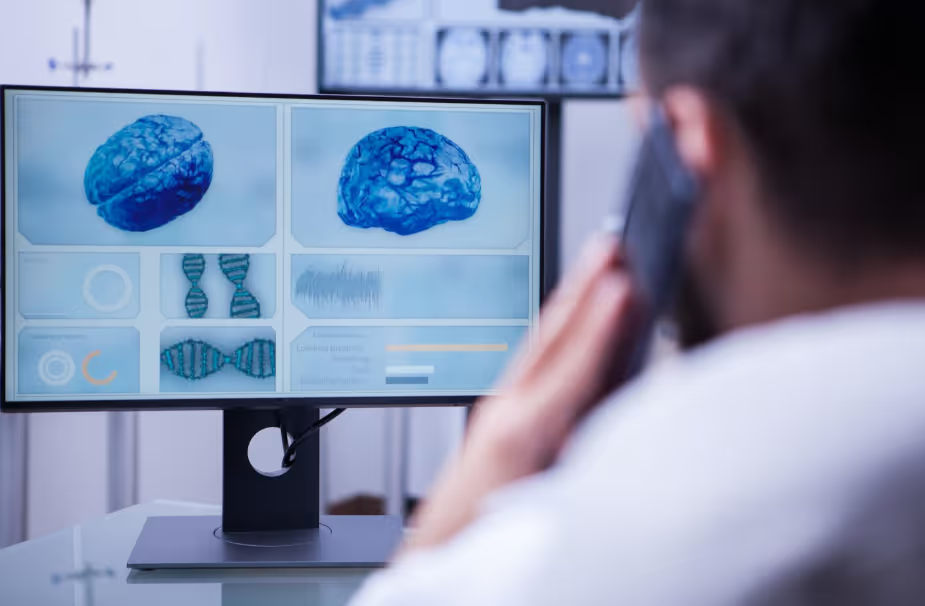
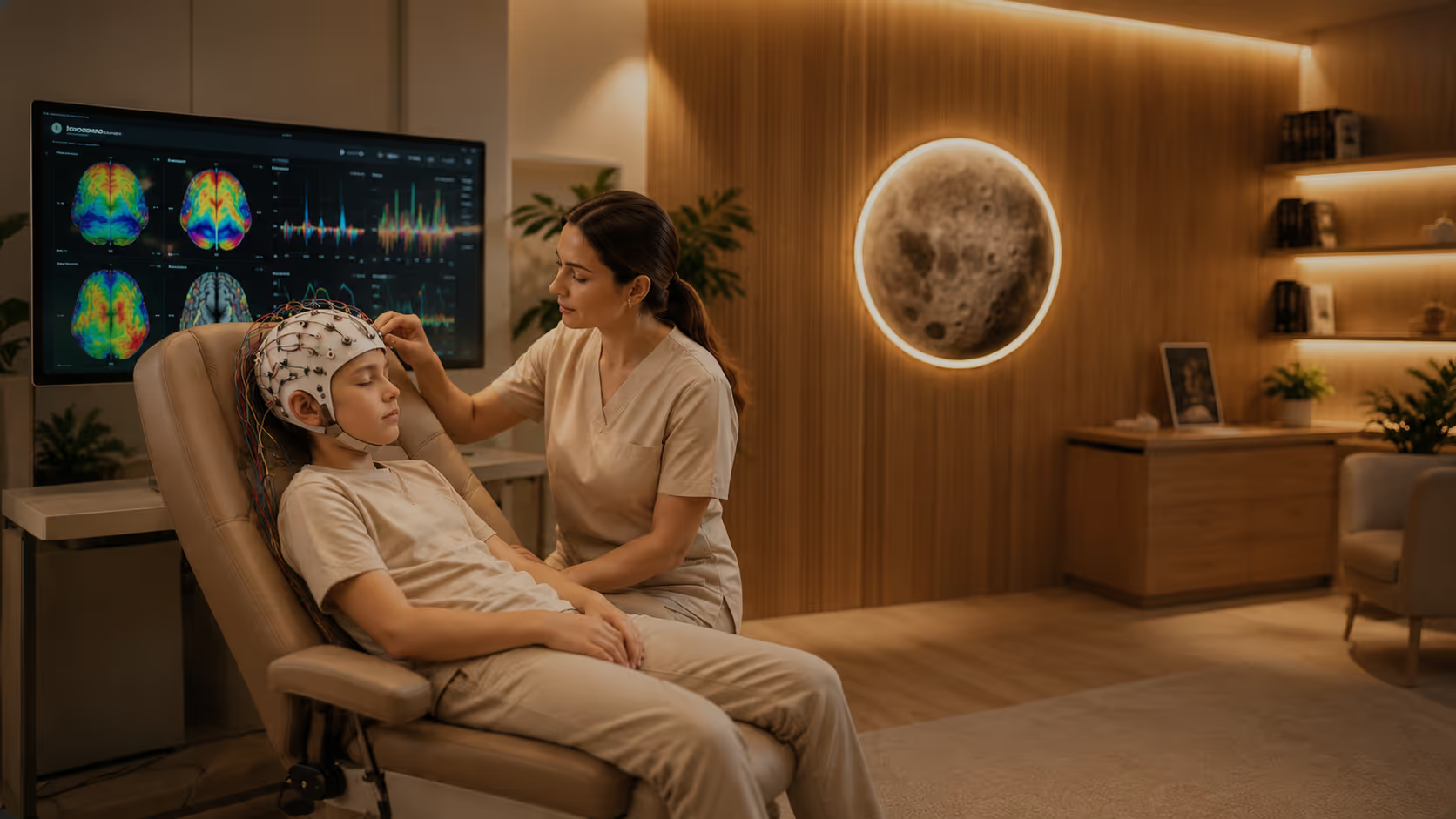
- QEEG and Brain Mapping - functional brain map, especially useful for assessing background activity and associated cognitive difficulties
- Brain MRI - when a structural cause is suspected (through partner clinics)
- Genetic diagnostics - targeted epilepsy gene panels, exome sequencing for syndromic forms, early encephalopathies, drug-resistant cases
- Metabolic diagnostics - when congenital metabolic disorders are suspected, in cases of unusual seizures or developmental regression
- Pharmacogenetics - for selecting safe and effective medication therapy
- Neuropsychological assessment - when cognitive difficulties or school problems are suspected
- Video-EEG monitoring - when prolonged recording and video capture of seizures is needed (through partner centers)
How we treat epilepsy - a comprehensive approach
The program is always individual. The goal is seizure control + developmental support + minimization of side effects.

Medication therapy for epilepsy
- Selection of an anti-epileptic drug taking into account the type of epilepsy, age, and pharmacogenetics
- When necessary - combination therapy
- Regular monitoring of effectiveness and tolerability
- Gradual discontinuation with sustained remission
- Goal - complete seizure control with minimal side effects
Ketogenic diet and nutritional support
- Ketogenic diet - an evidence-based method for drug-resistant epilepsy
- Selection and monitoring by a nutritionist
- Correction of vitamin and mineral deficiencies (especially B6, D, magnesium)
- Managing side effects of anti-epileptic drugs through nutrition
Support for neuropsychological development
- Attention and executive function training
- Cognitive rehabilitation for cognitive difficulties related to epilepsy or medications
- Speech therapy for speech difficulties
Rehabilitation and motor development
- Physiotherapy and kinesiotherapy for motor impairments
- Sensory integration and OT for associated regulatory difficulties
Neurotechnologies (targeted use)
- Neurofeedback - for significant attention and regulation problems against a background of stable epilepsy (under neurological supervision)
- Photobiomodulation - in individual neuroprotection programs
Work with behavior and emotions
- CBT for associated anxiety or depression (especially in adolescents)
- Behavioral work for associated challenges
- Music and art therapy
Work with families
- Parent training: how to recognize a seizure, what to do, when to call emergency services
- Training on keeping a seizure diary
- Psychological support for the family - epilepsy often emotionally exhausts parents
- Manualized Parent Training program for behavioral challenges
School support
- Recommendations for teachers - how to respond to a seizure, what accommodations are needed
- Coordination with the school nurse when necessary
- Academic load adaptations for cognitive difficulties
First aid and safety
- Training family members in first aid rules
- Creating a safe home environment
- Recommendations for sports, swimming, cycling - what is allowed, what requires special conditions
How often and for how long
No child receives «everything» - the plan is assembled based on the specific profile. This is a typical set of modules.
01
Intensity
At the start - 2–4 visits in the first month for therapy selection. Then - scheduled epileptologist check-ups every 2–3 months + developmental modules according to the individual plan.02
02
Parent module
Mandatory. The family is the primary observer of seizures and partner in therapy selection.
03
Duration
Support is long-term. When remission is achieved - gradual discontinuation of therapy under supervision (usually after 2–3 years of sustained remission). Developmental modules - as needed.
What changes as a result of treatment
With properly selected therapy, epilepsy is well controlled in most cases. We work to ensure that the child:
- seizures disappear or become significantly less frequent
- medications are tolerated without pronounced side effects
- normal development is preserved and continues
- cognitive and behavioral difficulties do not accumulate
- there is an opportunity to attend regular school or kindergarten
- the family knows how to act in any situation
- the child does not feel «sick» or limited
About 70% of children with epilepsy achieve complete seizure control with medication therapy. In some, sustained remission occurs with the possibility of discontinuing medications. For drug-resistant forms, the ketogenic diet works; for some syndromes, specific protocols are effective.
Progress is tracked through a seizure diary, regular EEGs, and developmental assessment.
Case from practice
A 5-year-old boy referred with a diagnosis of «epilepsy». At the time of consultation - 4–6 seizures per week despite therapy with two medications, pronounced fatigue, speech delay, conflicts at kindergarten, parents exhausted, taking turns sleeping to monitor the child.
The standard path: a neurologist at a local clinic - increasing dosages, adding a third medication, recommendation to «wait».
What was done at KidiMind:
- Comprehensive diagnostics: clarifying EEG, QEEG, genetic panel of epilepsy genes, metabolic diagnostics, pharmacogenetics
- A rare monogenic form of epilepsy was identified - this determined the choice of first- and second-line medications (part of the existing therapy turned out to be suboptimal)
- Anti-epileptic regimen adjusted - transition to a medication effective for this specific mutation
- In parallel - nutritional support: correction of B6, omega-3, and magnesium deficiencies
- Speech therapy to address speech delay
- Sensory integration and motor rehabilitation
- Work with parents: first aid training, seizure diary keeping, psychological support
- Coordination with school
Results after 8 months:
- Seizures reduced from 4–6 per week to 1–2 per month
- Fatigue decreased, child became more active
- Emergence of 3–4 word phrases
- Peaceful attendance at kindergarten
- Parents slept a full night for the first time in two years
Name changed, case published with written consent from the family. This case shows why precise genetic diagnostics matter in pediatric epilepsy - it changes medication selection.

Frequently asked questions from parents about epilepsy in children
Every program module undergoes regular effectiveness checks. If a specific method does not yield the expected progress, we change it without waiting for it to «work someday».
My child had one seizure. Is this already epilepsy?

No. The diagnosis of epilepsy is made when there are two or more unprovoked seizures, or when specific EEG changes are identified in combination with the clinical picture. A single seizure requires examination, but does not mean epilepsy.
Is epilepsy forever?
Not always. In many children, proper therapy achieves sustained remission, and after 2–3 years without seizures, medications can be gradually discontinued.
In some children, the form of epilepsy is naturally «outgrown».
Which medications are given to children with epilepsy?
The choice depends on the type of epilepsy, age, and individual characteristics. Modern medications are effective and relatively safe, but require careful selection and monitoring. Self-treatment and independent discontinuation are unacceptable.
What is the ketogenic diet?
This is a specific therapeutic diet high in fats and low in carbohydrates. It is evidence-based and effective for drug-resistant epilepsy. Do not confuse it with the standard «keto diet» for weight loss - the pediatric protocol requires strict medical supervision.
Is genetic testing necessary for epilepsy?
In most cases - yes. Especially for early-onset epilepsy, syndromic forms, drug resistance, or developmental regression. The precise cause often changes medication selection.
Can a child with epilepsy attend regular school?
In most cases - yes. With controlled epilepsy, a child can study in a regular school. With associated cognitive difficulties, accommodations are needed; in rare cases, a specialized program may be required.
What to do during a seizure?
Stay calm, place the child on their side, remove dangerous objects, do not put anything in the mouth, and time the seizure. If the seizure lasts more than 5 minutes or repeats - call emergency services. Full first aid training is part of our program.
Can they do sports?
In most cases - yes, with reasonable limitations. Swimming - only under supervision, cycling - with a helmet, team sports - usually allowed. Specific recommendations are provided by the epileptologist.
Do you accept Russian-speaking families?
Yes. Part of our team speaks Russian, Spanish, and English. All consultations are available in Russian.
Epilepsy is treatable - and a child's development should not wait
The more precise the diagnostics and the earlier the correct therapy is started, the better the prognosis. Book a consultation with an epileptologist - in one visit, our team will gather the medical history, assess the current situation, and propose a specific plan for examination and support.
Carrer Viladomat 135, 1-1, Eixample, 08015, Barcelona
Mon-Fri 10AM-6PM
Mon-Fri 10AM-6PM