Brain
Differences in neurological regulation, including ADHD, can be assessed through a neurological examination and psychological assessment.
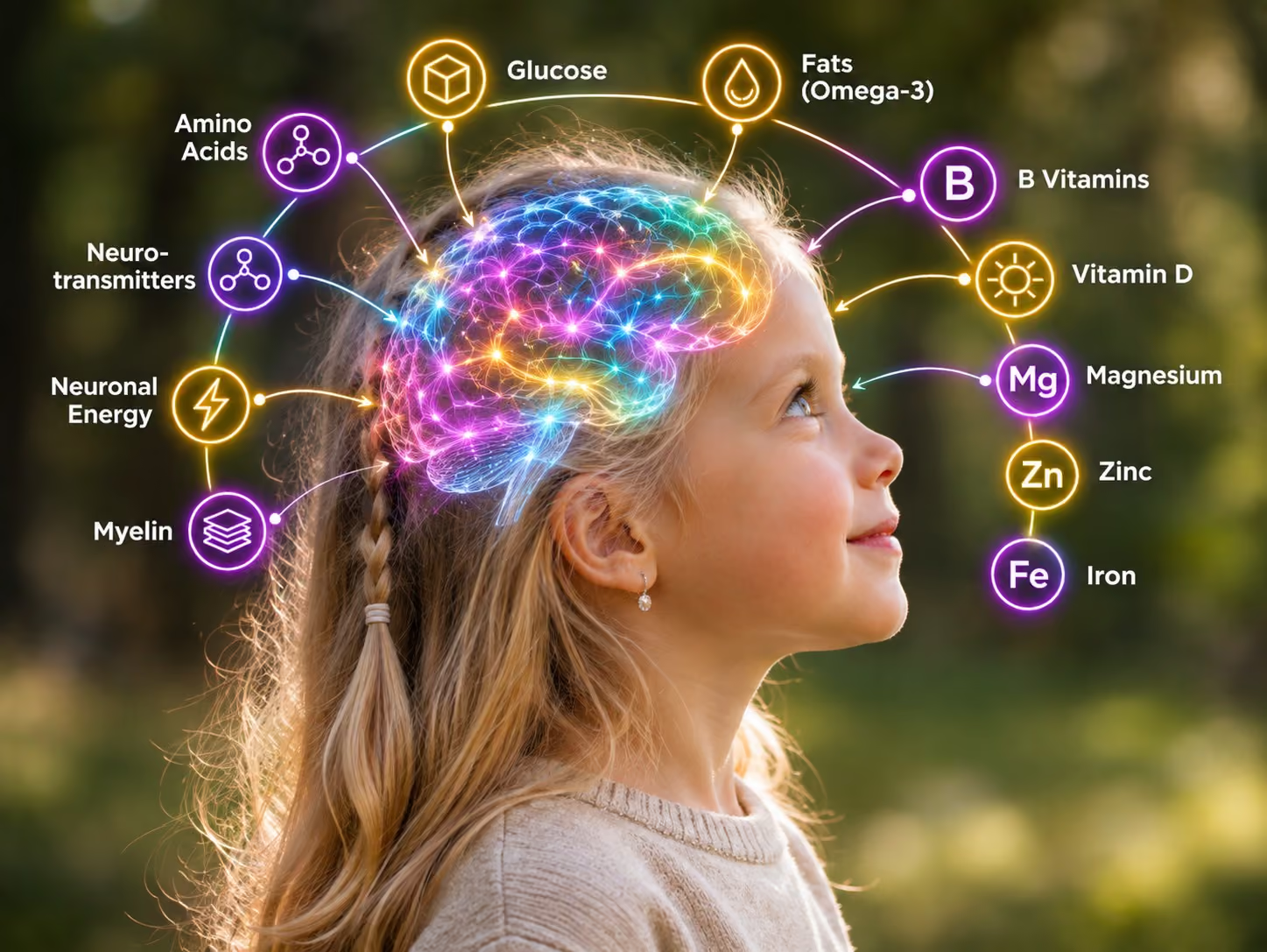

| Building blocks | Essential cofactors: vitamins and minerals | What the body produces | What parents may notice |
|---|---|---|---|
| Tryptophan | Iron, B6 | Serotonin, melatonin | Mood, sleep onset |
| Tyrosine | Iron, B6, copper, vitamin C | Dopamine, noradrenaline | Attention, motivation |
| Glutamate | B6 | GABA | Ability to calm down and regulate responses |
| Glucose | B1, iron, magnesium | Energy for neurons | Stamina, concentration |
| Fats, proteins | Iron, B12, omega-3 | Myelin | Processing speed, development |

14 amino acids are building blocks for neurotransmitters and can help identify inherited metabolic conditions:
phenylalanine, tyrosine, leucine and isoleucine, valine, methionine, arginine, glycine, serine,
proline, threonine, histidine, lysine, tryptophan and taurine.
Free carnitine supports cellular energy metabolism.
Acylcarnitine profile shows how the body uses fats for energy. It can help identify fatty acid oxidation disorders and certain organic acidemias.
The same technology is used in newborn screening.
Organic acids: functional markers of vitamin B12 (methylmalonic
acid), folate (FIGLU), biotin (3-hydroxyisovaleric acid) and B6 (xanthurenic acid); energy metabolism indicators; and markers of inherited metabolic conditions
(including orotic, glutaric and ethylmalonic acids).
These markers can help assess whether vitamins are being used effectively in cells; they do not directly measure vitamin
concentrations.
How your child metabolises medicines: CYP2D6, CYP2C19, CYP2C9 and CYP3A5.
Genetic susceptibility to coeliac disease: HLA-DQ2.5, DQ2.2 and DQ8.
Genetic predisposition to lactose intolerance: variants of the MCM6 gene, which regulates lactase production.
Generally informative from age 5–6. We focus on findings relevant to childhood, not predictions about adult-onset conditions.